Cost per lead vs cost per acquisition is the difference between what your ads cost and what your customers cost. Most businesses only track the first one, because it is the number Ads Manager shows. The second one is the number that decides whether you make money.
Here is how the two differ, with real examples from our accounts. Client names are masked.
Cost per lead vs cost per acquisition: the definitions
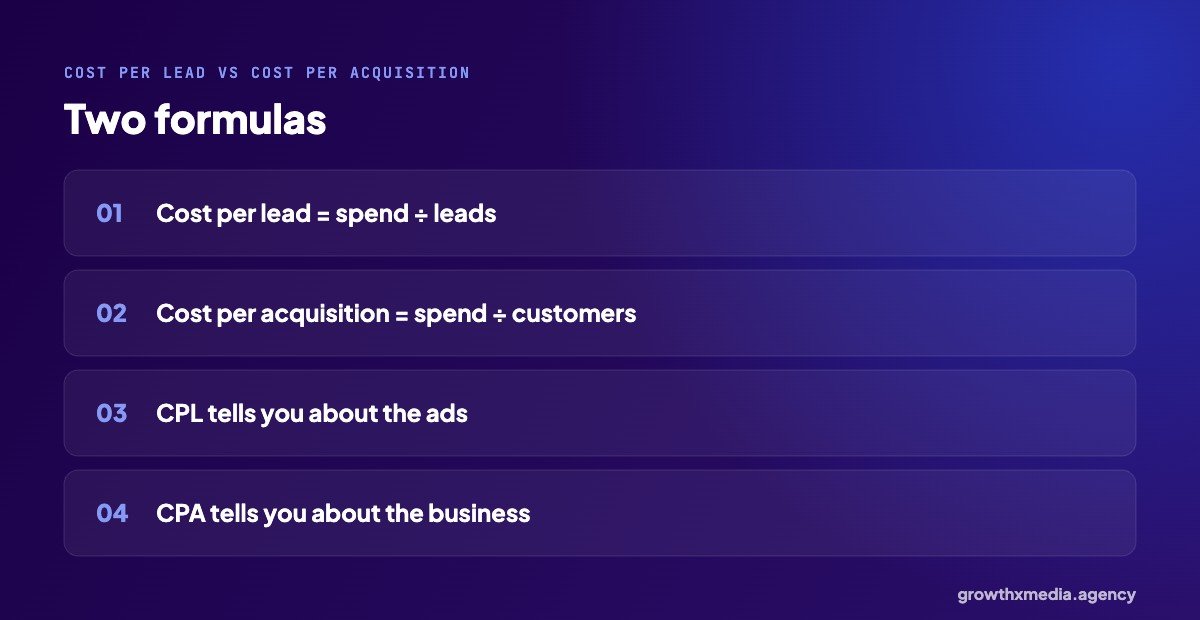
- Cost per lead (CPL) = ad spend ÷ number of leads.
- Cost per acquisition (CPA) = ad spend ÷ number of new customers.
If you spend ₹50,000, get 1,000 leads and 20 of them buy, your cost per lead is ₹50 and your cost per acquisition is ₹2,500. Our guide on how to calculate cost per lead covers the first part in detail.
Why a cheap lead can be an expensive customer
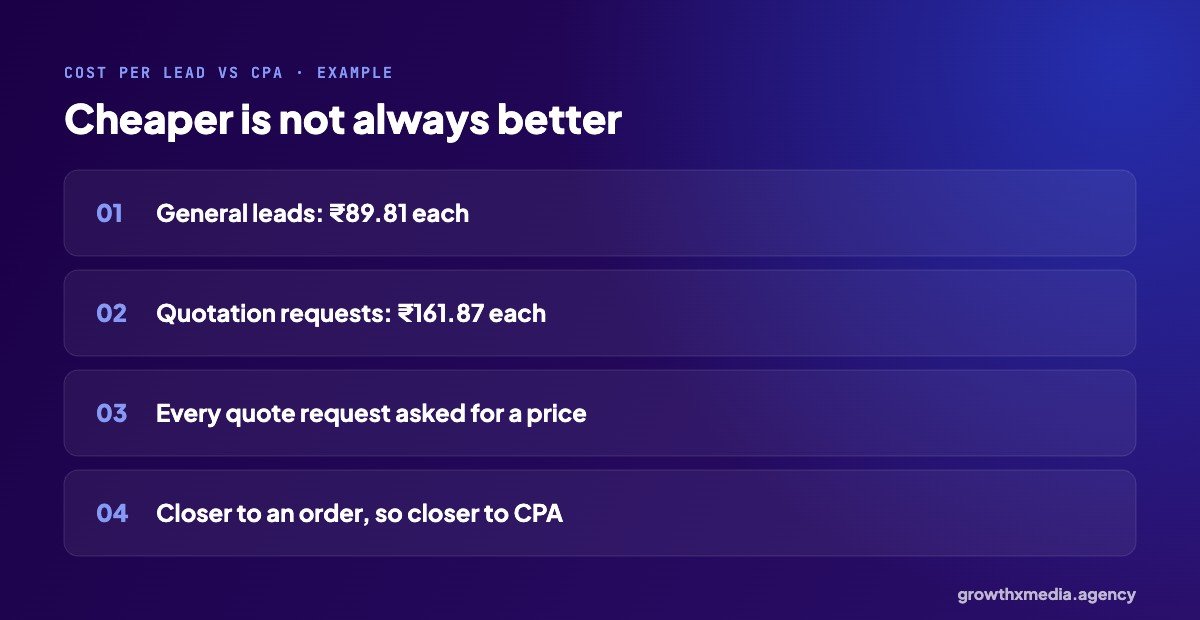
A CNC machine maker we work with runs two kinds of campaign. General enquiries cost ₹89.81 per lead. Quotation requests, with qualifying questions in the form, cost ₹161.87 per lead.
On cost per lead, the general campaign looks almost twice as good. But every one of the 243 quotation requests was a buyer asking for a price. When you compare cost per lead vs cost per acquisition, the more expensive lead is often the cheaper customer.
When cost per acquisition is easy to see
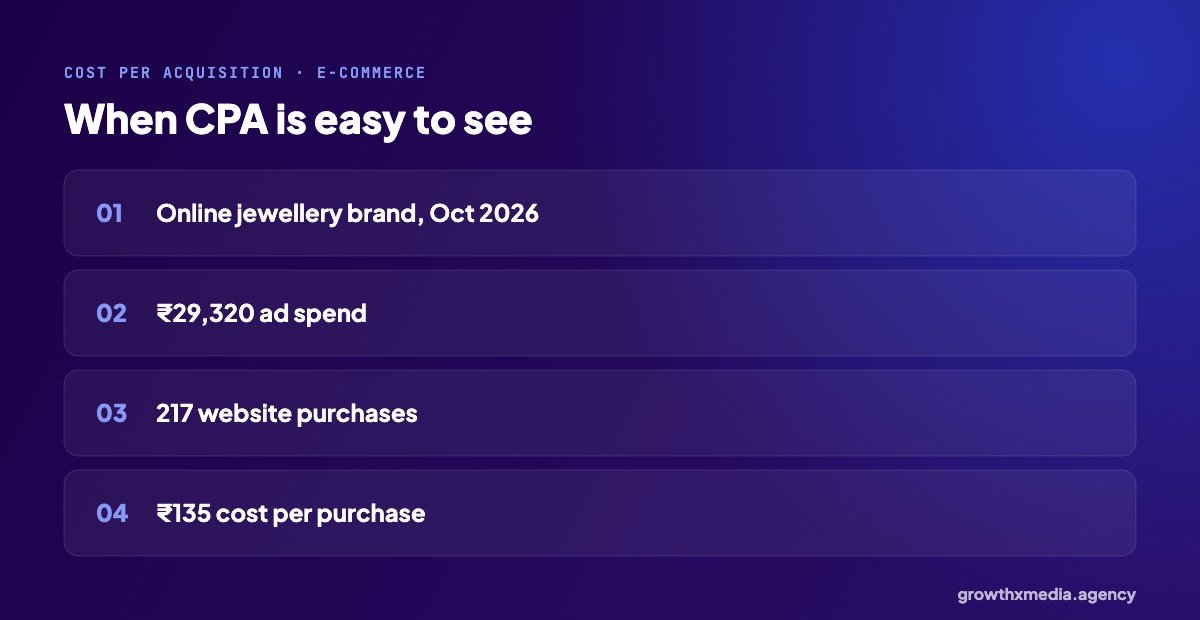
Online stores have it easy: the sale happens on the website and Meta records it. An online jewellery brand spent ₹29,320 in October 2026 and got 217 purchases, a cost per acquisition of ₹135. More in our Meta ads for jewellery case study.
Lead businesses have it harder, because the sale happens later, on the phone or in person. That is exactly why so many only look at cost per lead.
How to start tracking cost per acquisition
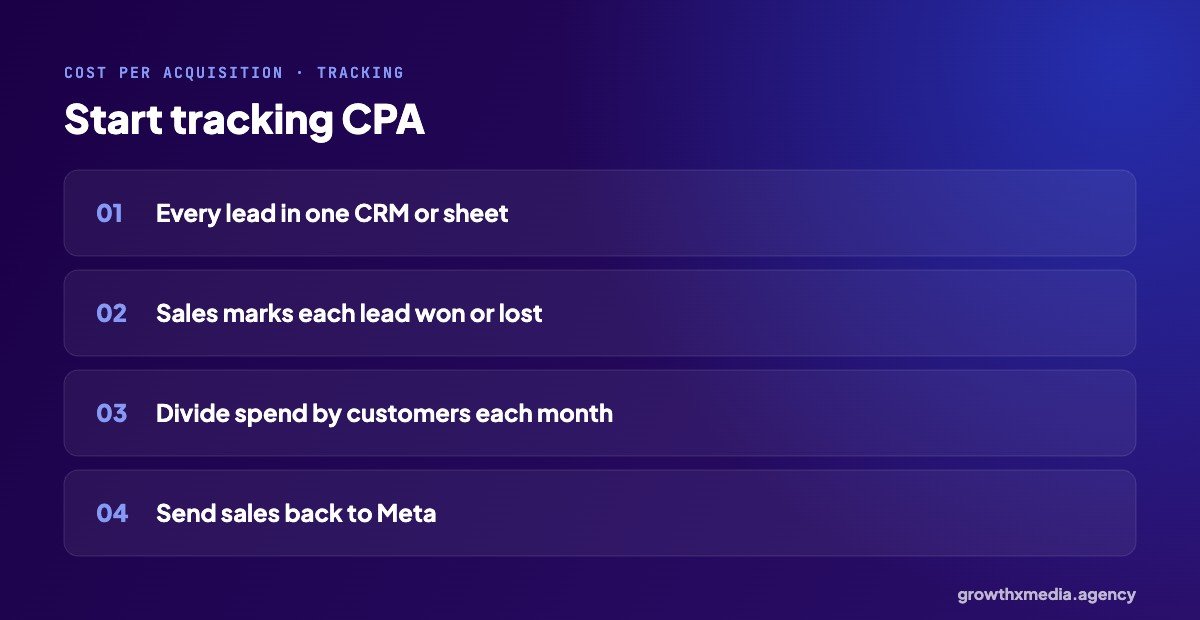
- Keep every lead in one CRM or a shared sheet, with the campaign it came from.
- Ask sales to mark each lead as won, lost or still open.
- Each month, divide ad spend by the number of new customers.
- Send sales back to Meta with the Conversions API so it finds more buyers.
Which number should you report?
Both. Cost per lead tells you whether the ads are doing their job. Cost per acquisition tells you whether the whole system works: ads, follow-up and sales together. Looking at cost per lead vs cost per acquisition side by side shows you where the problem is.
- Low CPL, high CPA: the ads work, but leads are weak or follow-up is slow.
- High CPL, low CPA: the leads are expensive but good. Don’t cut this campaign just because CPL looks bad.
- Both high: fix the offer and the creative first.
This is why our weekly reports always include closed revenue alongside cost per lead. See why cost per lead keeps rising for the other numbers we track.
A worked example: cost per lead vs cost per acquisition
Imagine two campaigns for the same business, each with ₹30,000 of spend in a month.
- Campaign A brings 1,000 leads at ₹30 each. Sales closes 10 of them. Cost per acquisition: ₹3,000.
- Campaign B brings 400 leads at ₹75 each. Sales closes 15 of them. Cost per acquisition: ₹2,000.
On cost per lead, Campaign A looks more than twice as good. On cost per acquisition, Campaign B is a third cheaper per customer. If you only watched cost per lead, you would cut the better campaign. This is exactly why the cost per lead vs cost per acquisition comparison matters.
What usually pushes cost per acquisition up
- Slow follow-up. Leads called the next day close far less often than leads called in minutes.
- No qualification. Sales spends its time on people who were never going to buy.
- The wrong offer. A free giveaway brings leads who wanted the giveaway, not the product.
- Mixed campaigns. Strong and weak products in one campaign hide which one actually sells.
Most of these are fixed outside Ads Manager: in the form, the follow-up and the sales process. See lead qualification process and lead follow-up on WhatsApp.
How often to review both numbers
Check cost per lead weekly, because ads change quickly. Check cost per acquisition monthly, because sales take time to close. For high-value products with long sales cycles, like machinery or property, look at a rolling three months so one slow month doesn’t mislead you.
Quick answers
Is CPA the same as customer acquisition cost?
Close. Customer acquisition cost (CAC) usually includes everything, like salaries and tools. CPA from ads usually counts ad spend only. Be clear which one you mean.
What is a good cost per acquisition?
Any CPA comfortably below the profit from a customer. That is why the cost per lead vs cost per acquisition question always ends with your margins. Meta explains its own metrics in Ads Manager. Or get a free ad account audit.
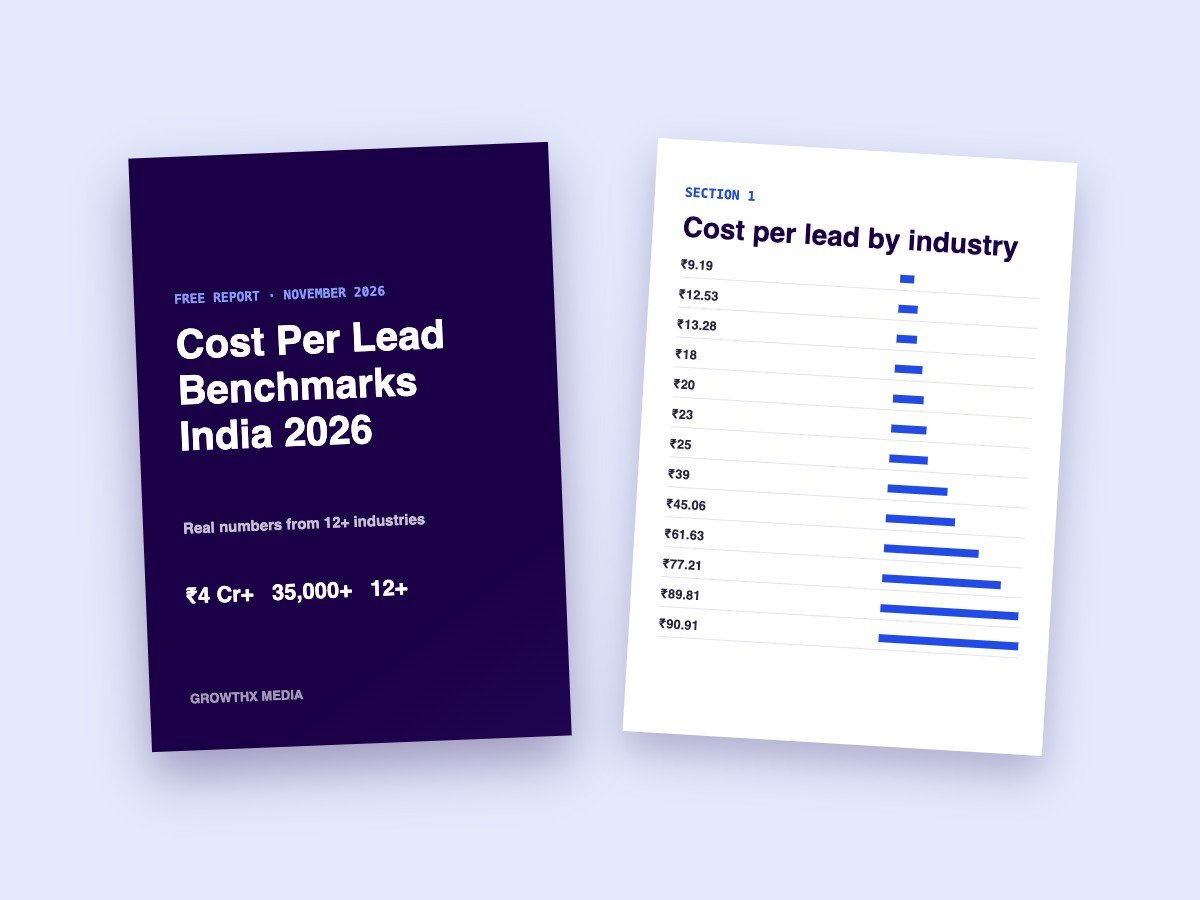
Want every benchmark in one place? Download our free cost per lead report with numbers from 13 industries.