If your cost per lead goes up every month, or the leads stop picking up the phone, the problem is rarely just “the algorithm”. In our experience, most lead generation fails somewhere between the ad and the sales call. These are the six leaks we look for first in every account.
1. Ad spend disappears with nothing to show
The leak: budget spread across too many campaigns and ad sets, so none of them get enough data to learn.
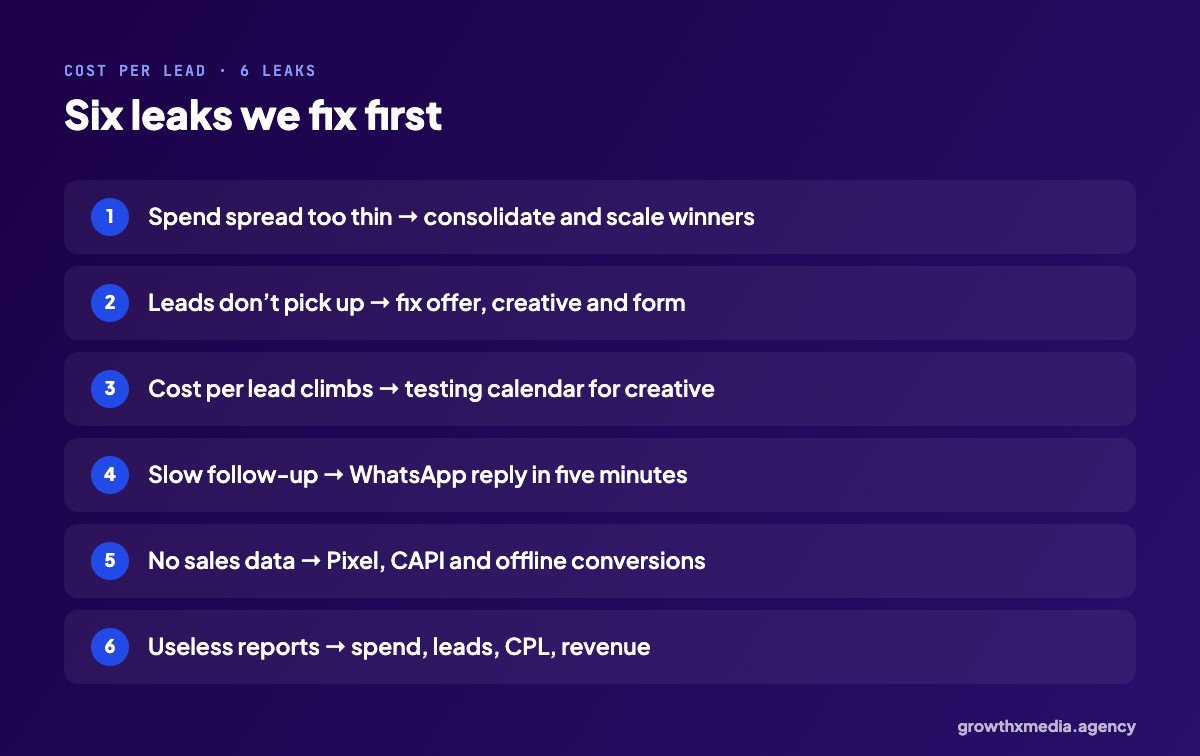
The fix: consolidate, kill the losers fast and scale only what converts. In one real estate account we shifted the daily budget to the top 3 of 19 ad sets, and held a ₹18 cost per lead over six months.
2. Leads arrive but never pick up the phone
The leak: the ad attracts curious browsers instead of buyers.
The fix: volume isn’t the problem, intent is. We change the offer, the creative and the form so only buyers raise their hand, using qualifying form questions or WhatsApp questions before the lead reaches sales.
3. Cost per lead climbs every month
The leak: the same few ads run until people stop noticing them.
The fix: that’s creative fatigue, not audience saturation. A testing calendar keeps fresh hooks in rotation. For a new dental clinic we tested 65 ad variations to find the hooks that worked.
4. Nobody follows up in time
The leak: a lead comes in, and the call happens hours or days later.
The fix: WhatsApp API routing and auto-qualification reach the lead in the first five minutes, when contact rates are highest.
5. No idea which campaign made the sale
The leak: the ad platform only sees form fills, so it optimises for more form fills, not more sales.
The fix: Pixel, Conversions API and GA4 with offline conversion feedback, so the algorithm learns which leads became customers and finds more like them.
6. Reporting that explains nothing
The leak: long reports full of reach, impressions and clicks, but no answer to “is this working?”.
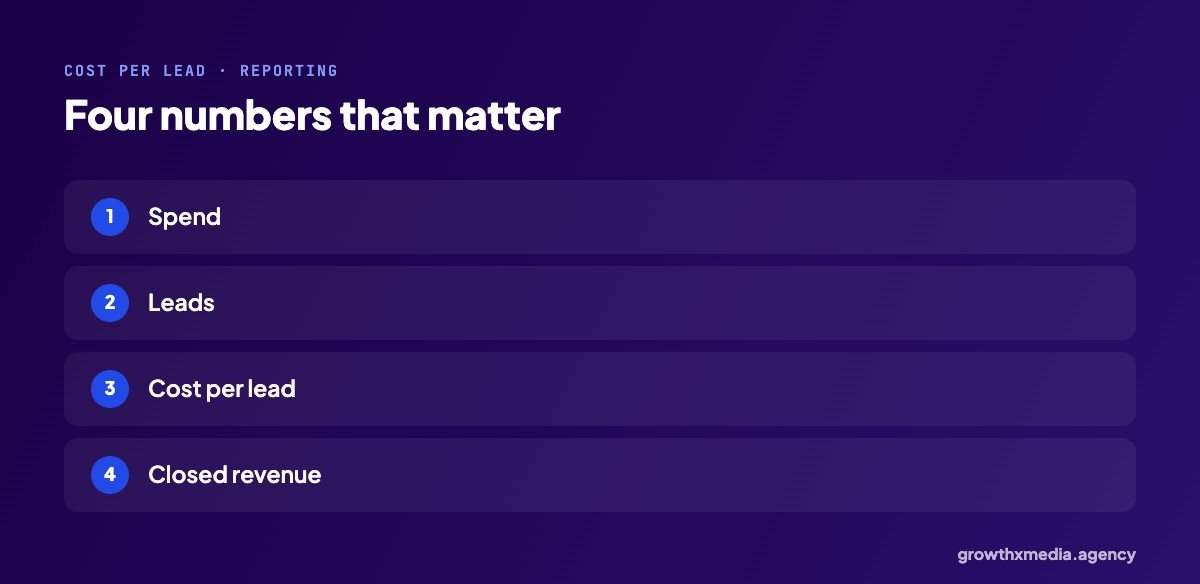
The fix: one dashboard and four numbers that matter: spend, leads, cost per lead and closed revenue.
Fix the whole lead engine, not one part
These leaks are connected. Right audience, right offer, a qualified lead, follow-up within five minutes and a closed deal: if one link breaks, cost per lead rises no matter how good the rest is. That is why we run ads, landing pages and follow-up as one system.
See what this looks like in real accounts on our lead generation results page, or compare our lead generation services.
A quick self-check for your account
Before you change anything, spend ten minutes with last month’s numbers and answer these honestly:
- How many campaigns and ad sets spent money? If you can’t name what each one is for, there are too many.
- When did the newest ad go live? If it was more than a month ago, fatigue is a likely suspect.
- How long did your leads wait for a first reply? Check ten of them.
- Can you say which campaign your last five customers came from?
If the last one is a no, tracking is the first fix. Meta’s Conversions API documentation is where your developer should start, so the platform learns from sales and not just form fills. Most cost per lead problems get easier once the algorithm can see which leads actually bought.
Cost per lead: quick answers
Why does cost per lead go up over time?
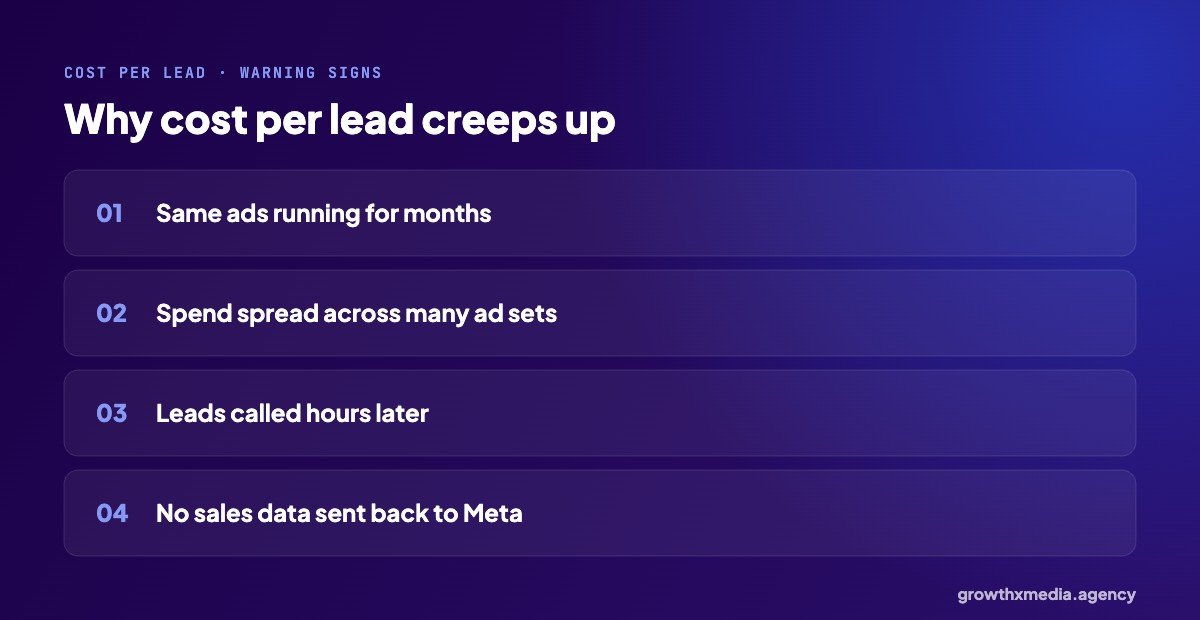
Usually ad fatigue, spend spread across too many ad sets, slow follow-up that makes leads look worse, or no sales data going back to Meta. Seasonal competition can add to it.
How often should I check cost per lead?
Weekly. Daily numbers move too much to act on, and monthly checks catch problems too late.
What should I fix first?
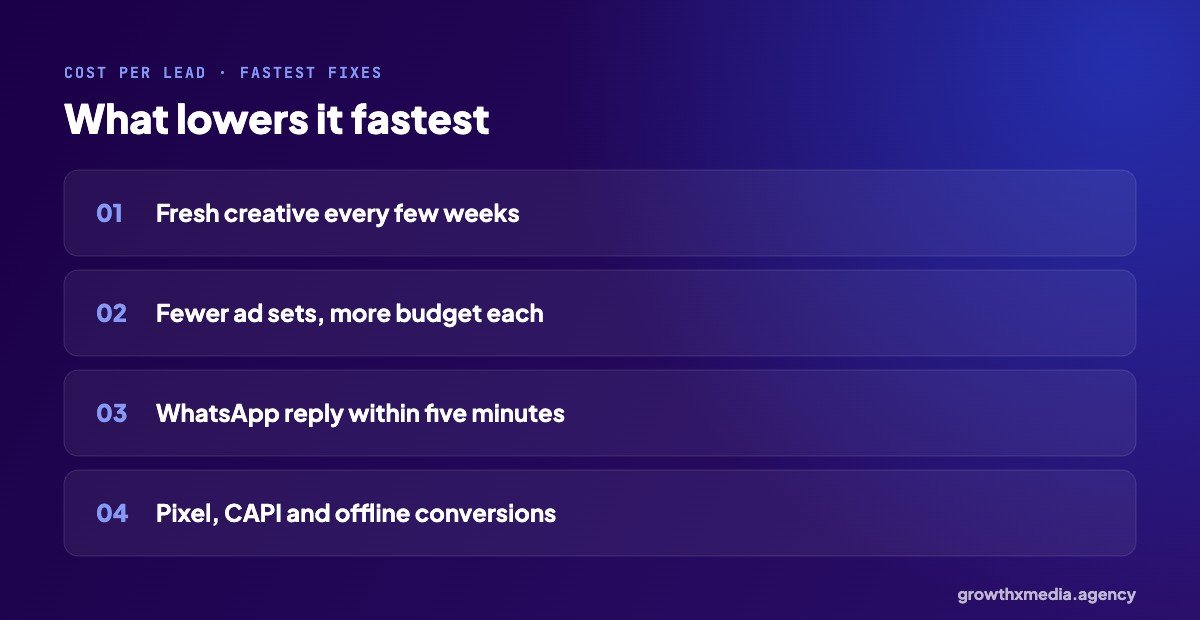
Start with follow-up speed and creative. They are the two fixes we see move cost per lead fastest on audits.
Related reading: How to Calculate Cost Per Lead (With 6 Real Examples From India), Facebook Ad Fatigue: 5 Warning Signs and How We Fix It and Cost Per Lead vs Cost Per Acquisition: Which Number Should You Trust?.
Want to know what your cost per lead should be? Send us your ad account for a free ad account audit. We’ll tell you the two or three changes that would move your cost per lead the fastest. No obligation either way.