Most manufacturers we meet have one Facebook ads campaign structure: everything in one campaign. Every product, every city, one budget. It feels tidy. It hides almost everything you need to know.
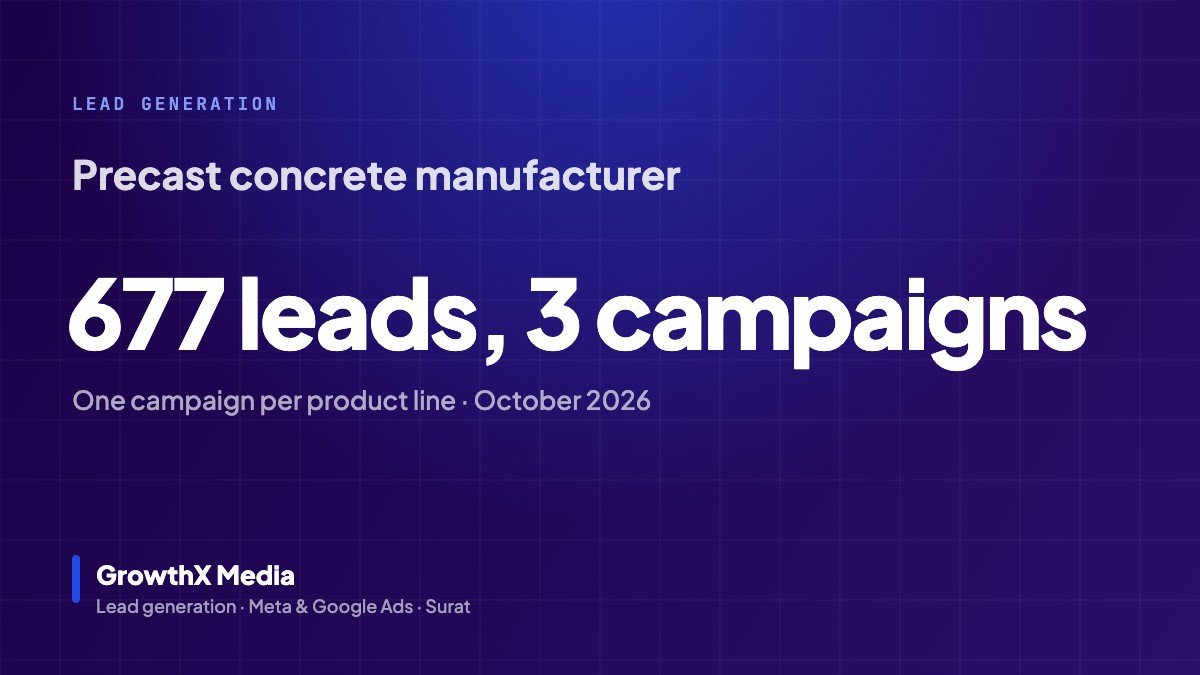
A precast concrete manufacturer we work with used to run that way too. Earlier this year, box culverts and U-drains shared one lead campaign. Now each product line has its own. Here is October 2026.
| Product line | Leads | Cost per lead | Daily budget |
|---|---|---|---|
| Box culverts | 286 | ₹96.95 | ₹1,000 |
| U-drains | 203 | ₹136.29 | ₹1,000 |
| Third product line | 188 | ₹32.72 | ₹200 |
| Total | 677 | ₹90.91 average |
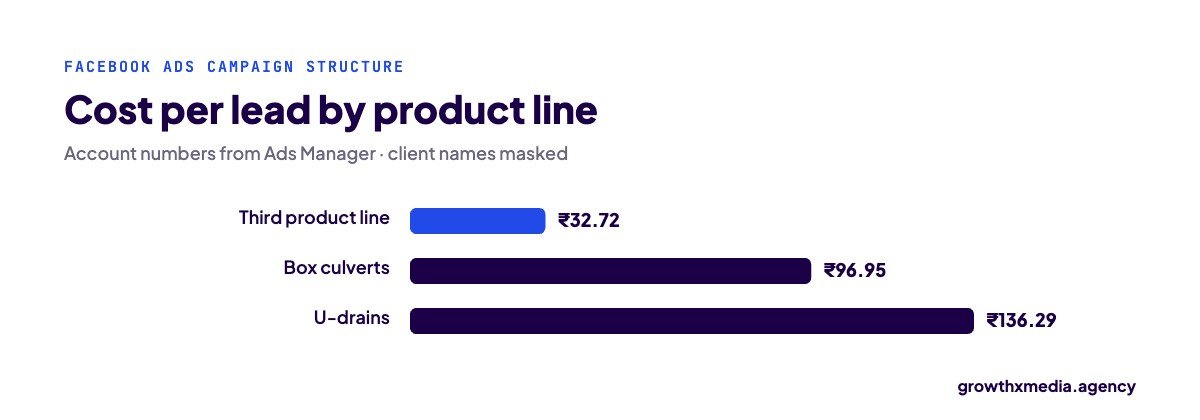
All three numbers are account totals from Ads Manager, with the client’s name kept private.
Why this Facebook ads campaign structure works
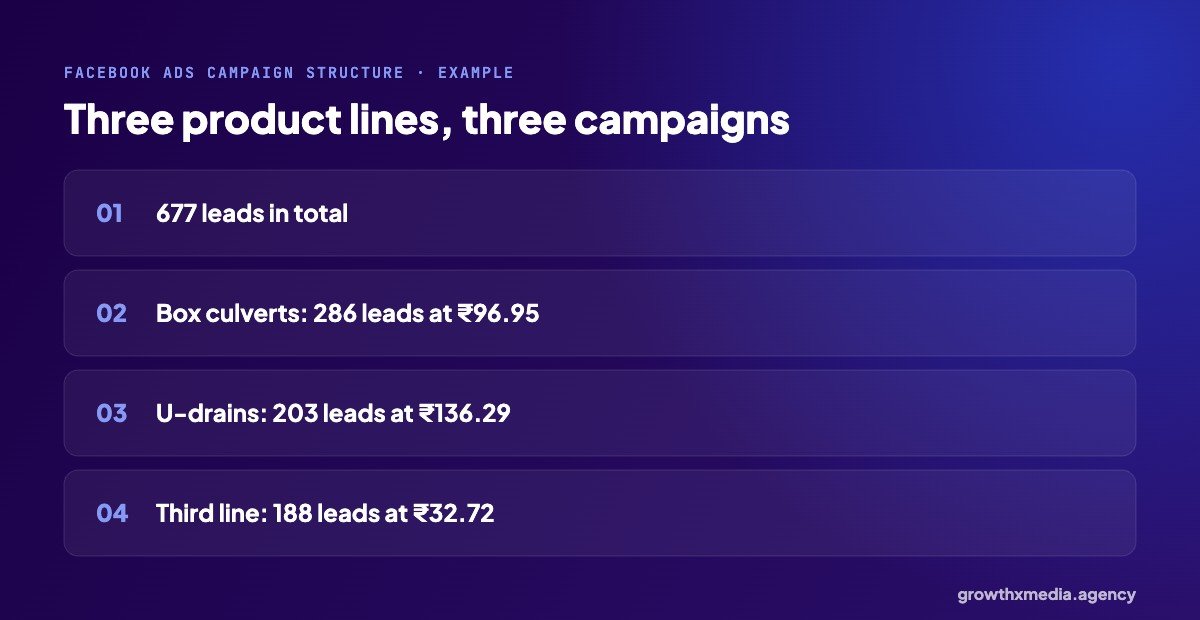
Look at the table again. The cheapest product brings leads at ₹32.72. The most expensive costs four times as much. In one mixed campaign you would only ever see the ₹90.91 average.
- You see each product’s real cost per lead. Then you can decide whether a ₹136 U-drain lead is worth it, based on order size.
- Budget goes where you choose. Not where the algorithm finds the cheapest clicks.
- Sales knows what the buyer wants. Every lead arrives already tagged with the product.
When not to split
Splitting only works if each campaign gets enough budget to learn. If your total budget is small, start with one or two product lines that matter most and add the rest later. Meta’s guide to ad objectives is worth reading before you set them up, so each campaign is aimed at leads and not just traffic.
We also run separate campaigns by city when a client sells in more than one market. This account had separate city campaigns earlier in the year for the same reason.
A quick way to try it
- List your products by how much a sale is worth to you.
- Give the top two or three their own lead campaign with a modest daily budget.
- After two to four weeks, compare cost per lead against order value for each one.
- Move budget towards the products where the maths works.
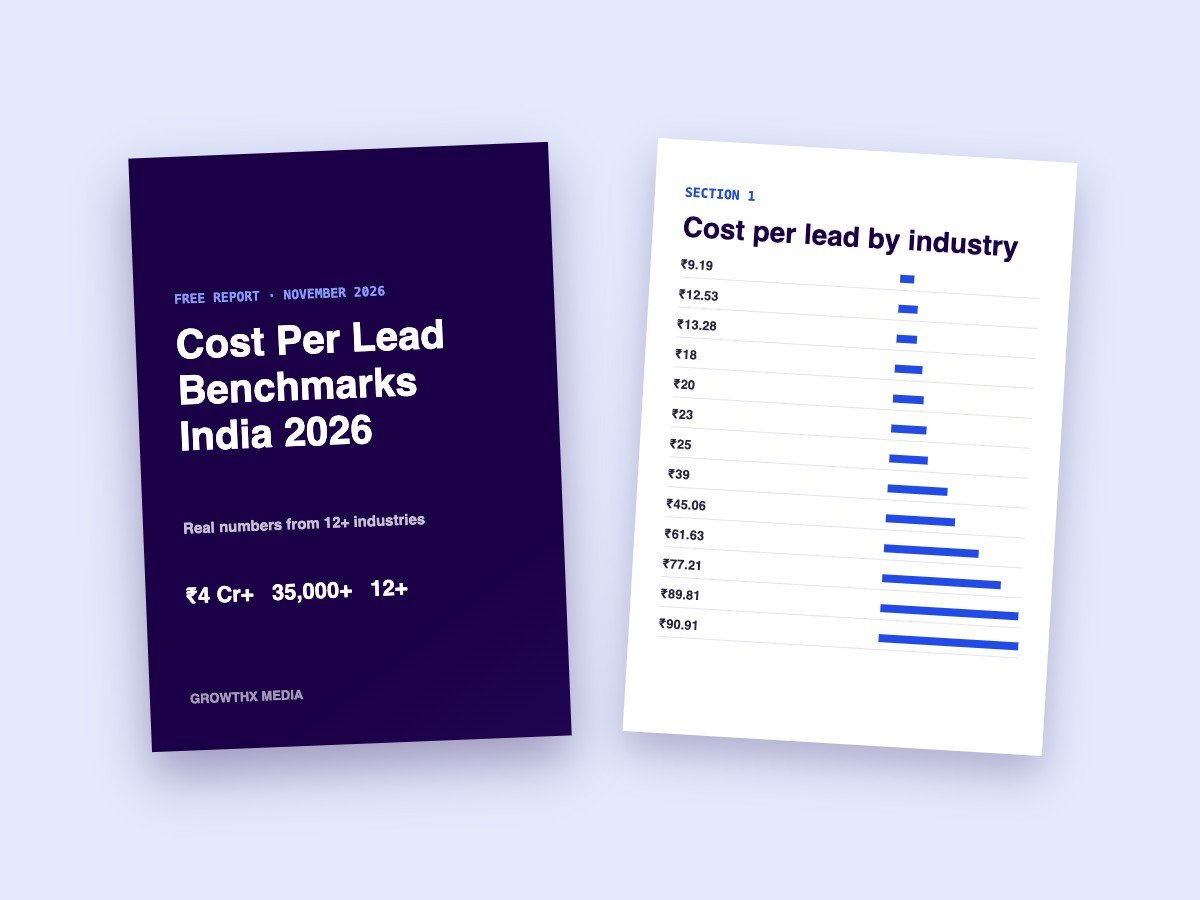
See how this fits into our work for factories on the B2B lead generation for manufacturers page, or read our cost per lead benchmarks by industry.
Facebook ads campaign structure for small budgets
A fair question: does a one-campaign-per-product structure need a big budget? Not really. The third product line here ran on ₹200 a day and brought leads at ₹32.72. The two bigger lines ran on ₹1,000 a day each.
What matters is that each campaign gets enough money to learn. If your total is ₹500 a day, two campaigns at ₹250 is a better start than five at ₹100.
Signs your current structure needs fixing
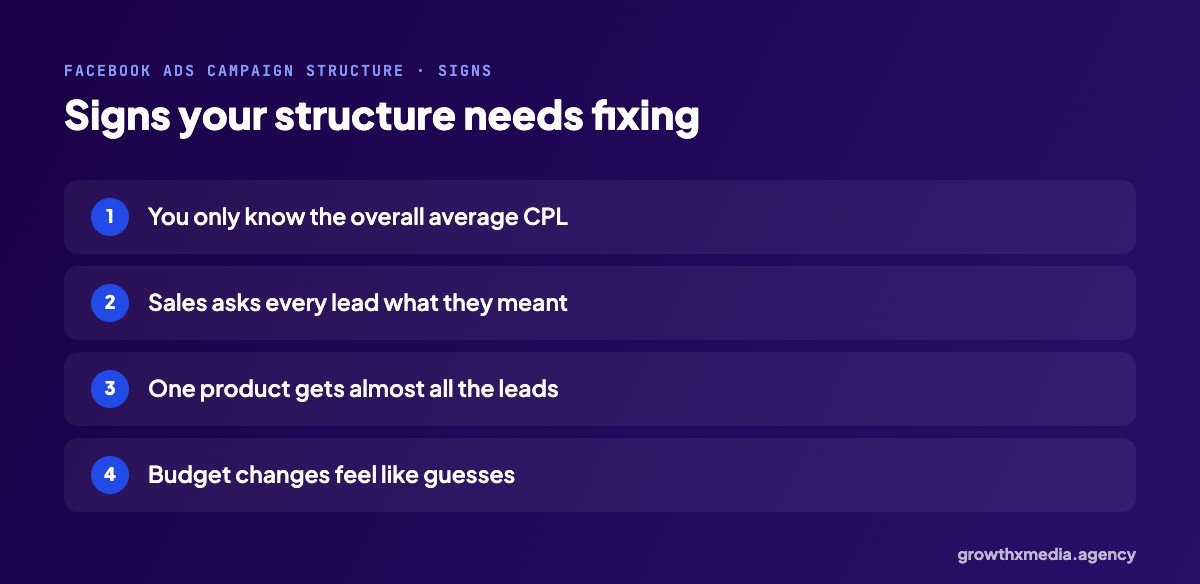
- You can’t say what one product’s leads cost, only the overall average.
- Your sales team has to ask every lead which product they meant.
- One product gets almost all the leads, and you don’t know if that’s because it sells better or because it’s simply cheaper to advertise.
- Budget changes feel like guesses.
If two or more of those sound familiar, your Facebook ads campaign structure is probably costing you more than the ads themselves. Splitting by product won’t fix a weak offer or slow follow-up, but it will show you where the problems are.
Splitting also makes reporting simpler for the business owner. Instead of one line that says “677 leads at ₹90.91”, you get three lines that each answer a real question: which product is in demand, which one is expensive to advertise, and where to put next month’s budget. That is the whole point of a Facebook ads campaign structure built around how you sell.
Facebook ads campaign structure: quick answers
Should each product have its own campaign?
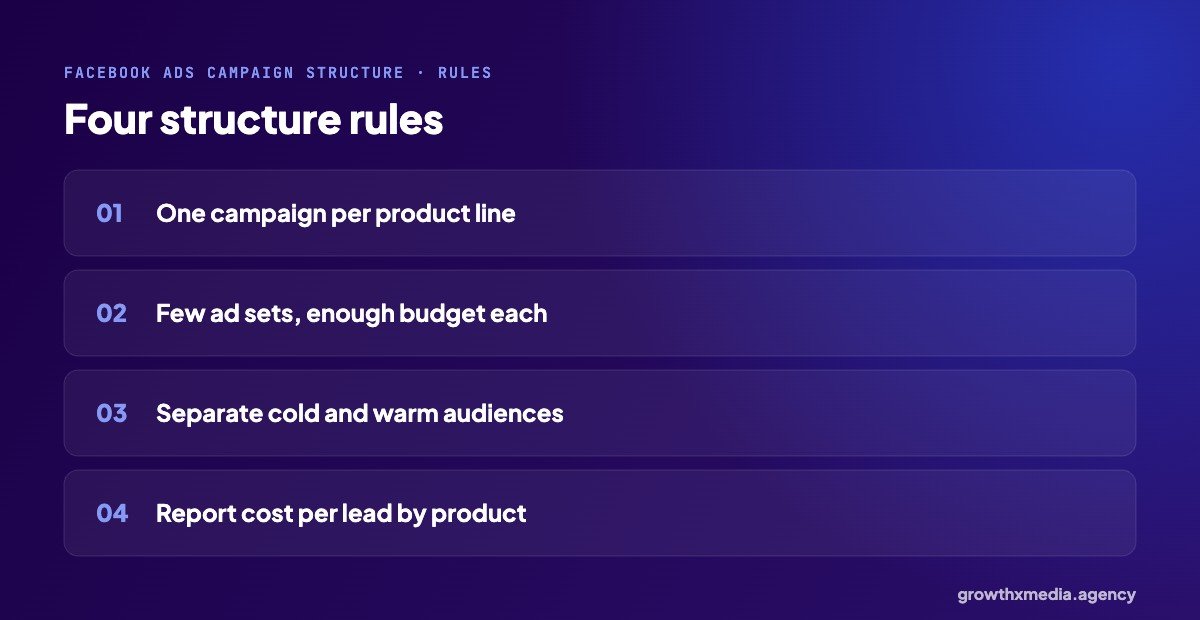
When products sell to different buyers or at different prices, yes. It shows which product each lead came from.
What did splitting by product show?
For a precast concrete maker, costs ranged from ₹32.72 to ₹136.29 per lead by product line. Mixed together, you would only see ₹90.91.
How many ad sets should a campaign have?
As few as possible, each with enough budget to get regular results.
Related reading: CBO vs ABO: Which Facebook Budget Setting We Use (and When), Facebook Ads Learning Phase: How Long It Takes and 5 Simple Rules and Facebook Lead Ads Not Working? 9 Proven Fixes We Use on Audits.
Running everything in one campaign? Send us your account for a free audit and we’ll show you how we’d split it.