CBO vs ABO is one of the first decisions when you build a Meta campaign. Both are about one thing: who decides how your budget is split between ad sets, you or Meta.
Neither is always better. Here is how they differ and how we choose in real lead generation accounts.
CBO vs ABO: the difference
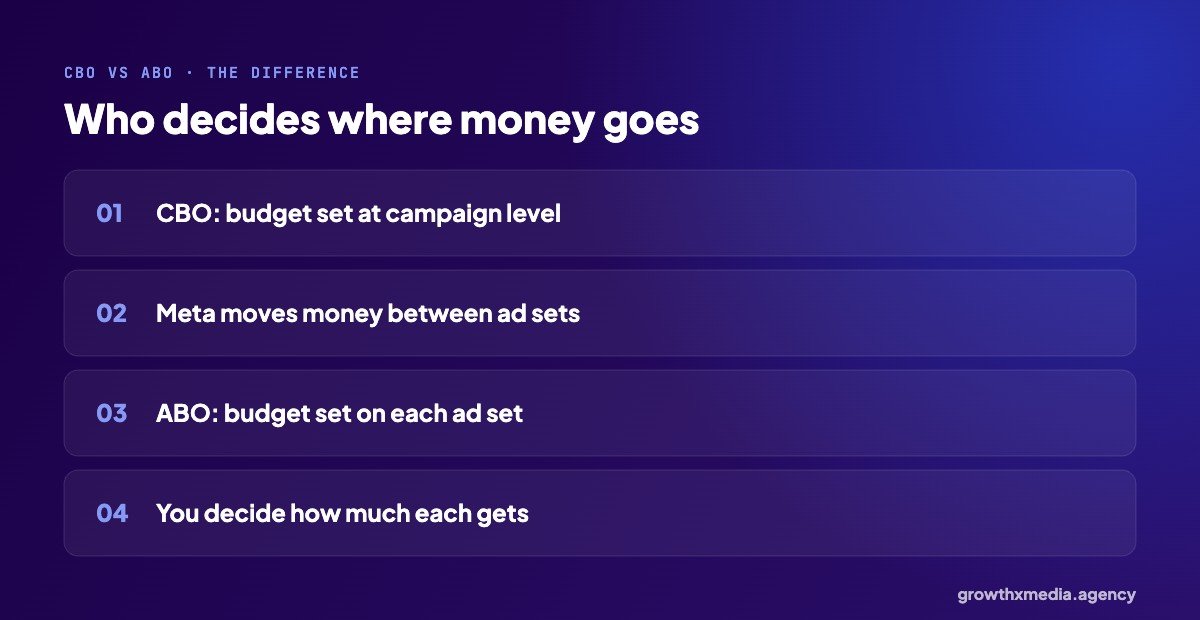
- CBO (campaign budget optimisation, now called Advantage campaign budget): you set one budget for the whole campaign, and Meta moves it between ad sets towards the best results.
- ABO (ad set budget optimisation): you set a budget on each ad set, and each gets exactly that.
When we use ABO (ad set budgets)
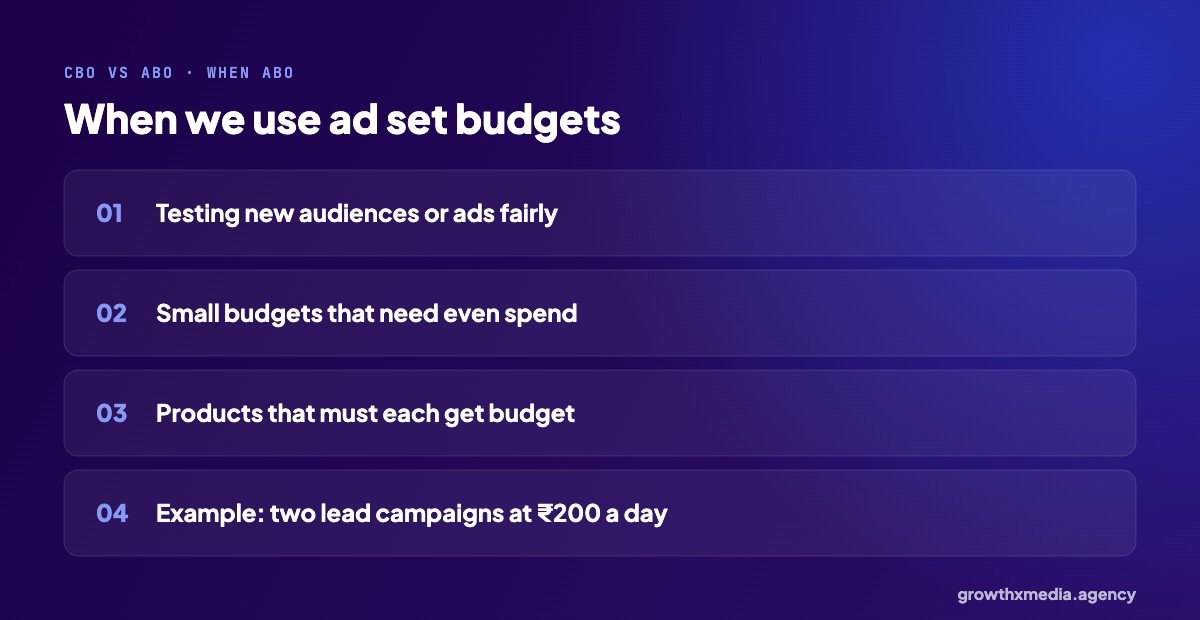
ABO is our default for testing. If you want to compare two audiences or two offers fairly, each needs the same money. With CBO, Meta may give almost everything to one ad set on day one, and the other never gets a real chance.
An industrial engineering company we work with ran two lead-form campaigns at ₹200 a day each in October 2026 and got 1,118 leads at ₹9.19. An automotive dealership runs one always-on campaign with budgets set at the ad set level. In both cases, controlled budgets kept spending even and easy to read.
When we use CBO (campaign budget)
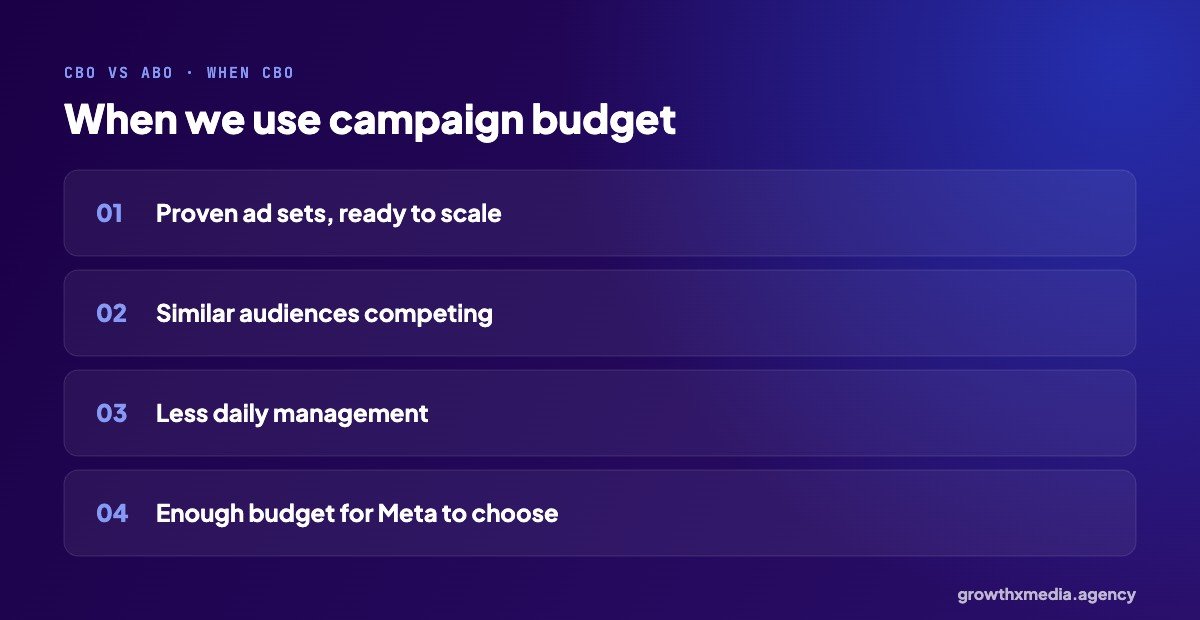
CBO works best once you know which ad sets work and want to scale them with less hands-on management. Meta is good at moving money towards whatever is getting results today, which can beat manual budgets when audiences are similar.
It needs enough budget to have something to move. With a tiny budget split across many ad sets, the CBO vs ABO choice matters less than simply having fewer ad sets.
4 rules we follow
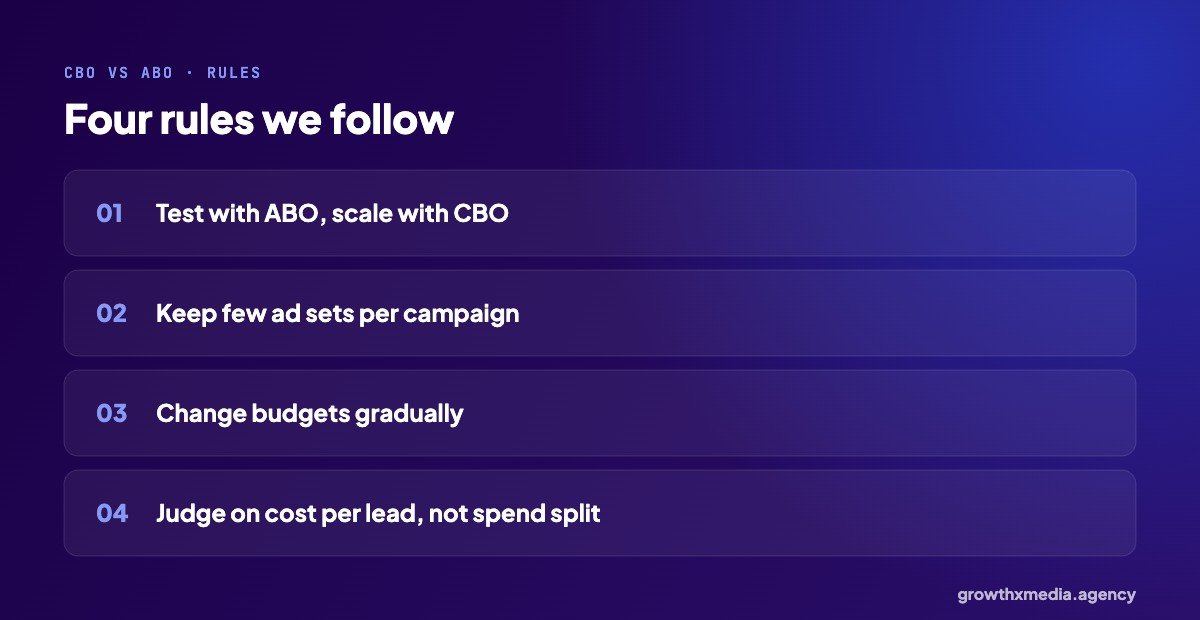
- Test with ABO, scale with CBO. Find winners with fair budgets, then let Meta optimise between proven ad sets.
- Few ad sets per campaign. Each needs enough budget to exit the learning phase.
- Change budgets gradually. Big jumps reset learning.
- Judge on cost per lead. Not on how evenly Meta spread the money.
Budget changes and the learning phase go together; see Facebook ads learning phase. For structure, our campaign structure post shows why one product line per campaign works.
A common CBO mistake
Putting very different audiences in one CBO campaign, like a cold audience and a retargeting audience. Meta will usually pour money into the cheaper-looking one, and the other gets starved. Keep very different audiences in separate campaigns.
A simple CBO vs ABO setup for a new account
This is the setup we use most often when starting from zero:
- Week 1–2: one campaign with ABO, two or three ad sets (for example, broad, a lookalike and interests), equal budgets, the same two or three ads in each.
- Week 3: pause the clearly weakest ad set and move its budget to the best one.
- Week 4 onwards: move the proven ad sets into a CBO campaign and let Meta balance the budget between them, while a small ABO campaign keeps testing new audiences or offers.
This keeps testing fair and scaling simple. It also means you always have a clean answer to the question “which audience works?”, which CBO alone doesn’t give you.
Budget rules that matter more than CBO vs ABO
- Each ad set needs enough budget to get regular results, or it never leaves the learning phase.
- Fewer ad sets beat many tiny ones.
- Raise budgets in steps, not overnight jumps.
- Keep very different audiences, like new prospects and past visitors, in separate campaigns.
If your account has 15 ad sets on ₹200 a day, the CBO vs ABO decision is the least of its problems. Consolidate first. Our ad budget guide explains how to size budgets.
CBO vs ABO: quick answers
Is CBO better for small budgets?
Not necessarily. With a small budget, the bigger win is fewer ad sets. CBO vs ABO matters more once you have several proven ad sets.
Can I set minimum spends in CBO?
Yes, Meta lets you set ad set spend limits inside a campaign budget, but heavy limits remove most of the benefit.
Meta explains Advantage campaign budget in its help centre. Or ask for a free ad account audit.
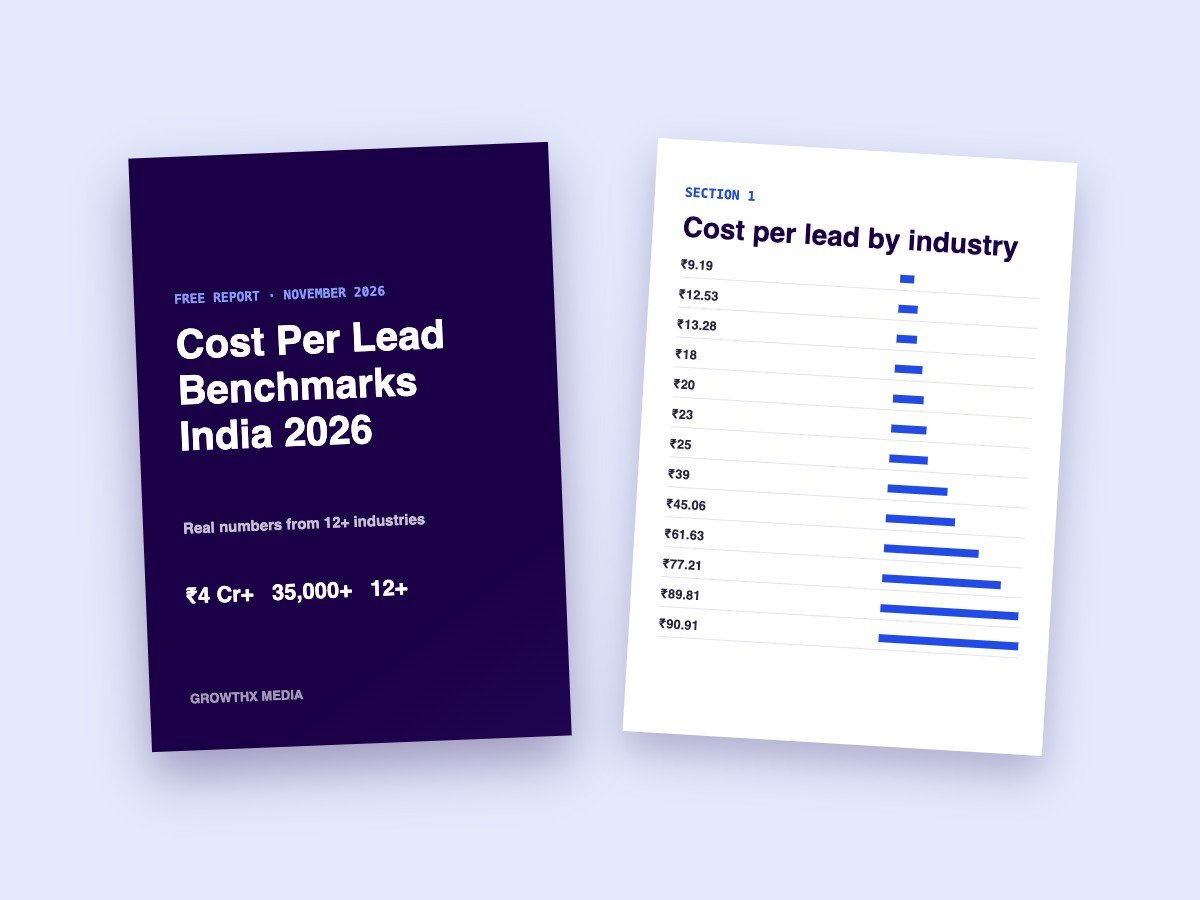
Want every benchmark in one place? Download our free cost per lead report with numbers from 13 industries.