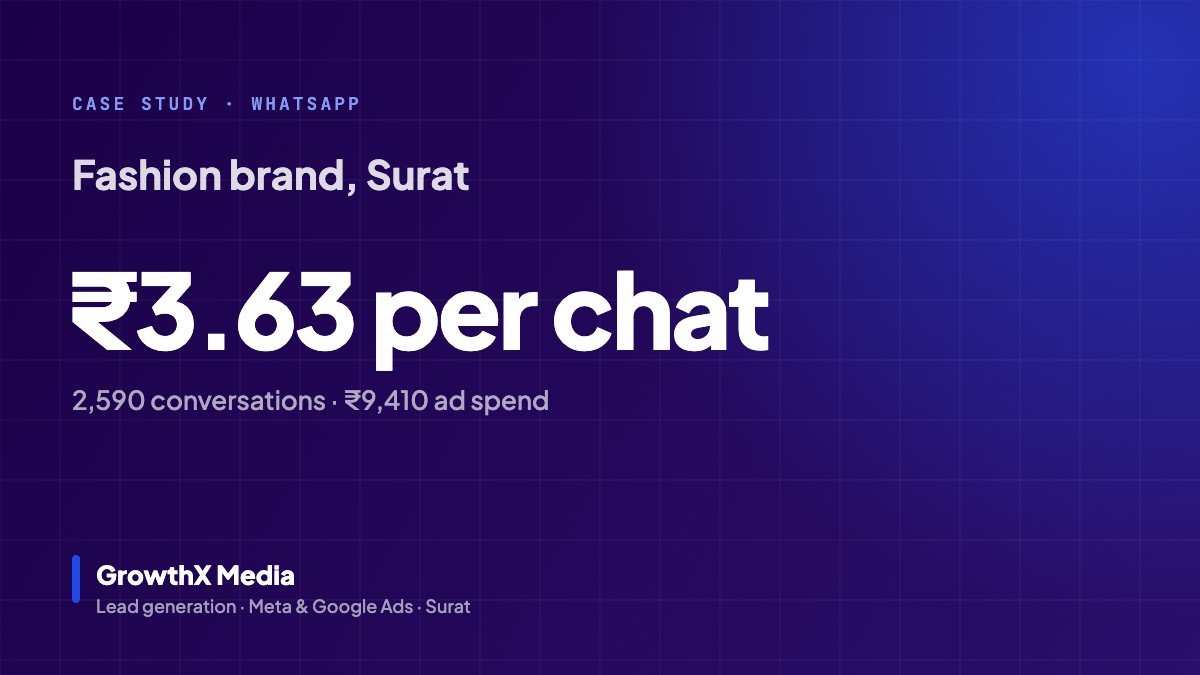
Retail margins don’t leave room for expensive leads. In this WhatsApp ads case study, a fashion brand in Surat came to us with a simple goal: get shoppers talking to the store directly, at a cost that works for retail. Here is how click to WhatsApp ads delivered 2,590 sales conversations at ₹3.63 each.
WhatsApp ads case study: the results at a glance
| Metric | Result |
|---|---|
| Cost per WhatsApp chat | ₹3.63 |
| Sales conversations | 2,590 |
| Total ad spend | ₹9,410 |
| Best single video | 2,417 conversations at ₹3.60 |
All figures are account averages from Ads Manager. Live screenshots are available on request.
The challenge
Fashion retail lives on volume and fast replies. A long lead form adds friction, and a shopper who has to wait for a call-back has usually moved on. The store needed real conversations with buyers, at a cost per conversation small enough to make sense on retail margins.
What we did with click to WhatsApp ads
1. Three video ads, ₹100 a day each
Instead of betting the budget on one creative, we launched three video ads with a small, equal daily budget each. That let the market decide which angle worked before any real money was committed.
2. No forms, straight to WhatsApp
Every ad opened a WhatsApp chat with the store. No form to fill, no waiting for a call. The shopper asks their question and the store answers in the same app they already use all day.
3. Budget moved to the winning video
Once one video clearly outperformed the others, the budget followed it. That single video drove 2,417 conversations at ₹3.60, most of the campaign’s total.
Why it worked
- Less friction. Starting a chat takes one tap. Filling a form takes several.
- Creative was the lever. Most agencies change audiences. We change hooks, and here one hook did most of the work.
- Speed to lead is built in. On WhatsApp the conversation starts the moment the shopper is interested.
Is click to WhatsApp right for your business?
It isn’t only for retail. We’ve seen ₹4.63 per chat for a B2B sportswear manufacturer and ₹6.91 for an automotive dealership, with an average of ₹4.88 per live sales conversation across these accounts. It works best when your team can reply quickly and the buyer has a question to ask before they buy.
See this and five more campaigns on our lead generation results page, or read how we run WhatsApp lead campaigns and follow-up.
Update: the same account in October 2026
We kept the account running. In October 2026 it brought in 910 more WhatsApp conversations at ₹3.06 each, from ₹2,788 of ad spend. That is cheaper per chat than the first campaign, and it came from the same basic setup: short video, one tap straight into WhatsApp, and budget moved to whatever is working.
If you want to try this yourself, Meta explains the format on its ads that click to WhatsApp page. The format is the easy part. What keeps the cost per chat low is the creative, and how fast someone replies once the chat starts.
Before you launch, check three things:
- Someone on your team can reply within minutes during the hours the ads run.
- Your WhatsApp Business profile has your address and timings filled in.
- You have two or three video ads ready, not one.
Get those right and the ads have a fair chance. Skip them and even a cheap chat turns into a buyer who never hears back.
What click-to-WhatsApp ads are, in plain words
A click-to-WhatsApp ad is a normal Facebook or Instagram ad with one difference: the button opens a WhatsApp chat with your business instead of a form or a website. The person taps, WhatsApp opens with a message ready to send, and the conversation starts on your business number.
That small change matters a lot in India, where almost every customer already lives on WhatsApp. There is no form to fill, no page to load, and no waiting for a call-back. The buyer asks a question in the app they use all day, and you answer in the same place.
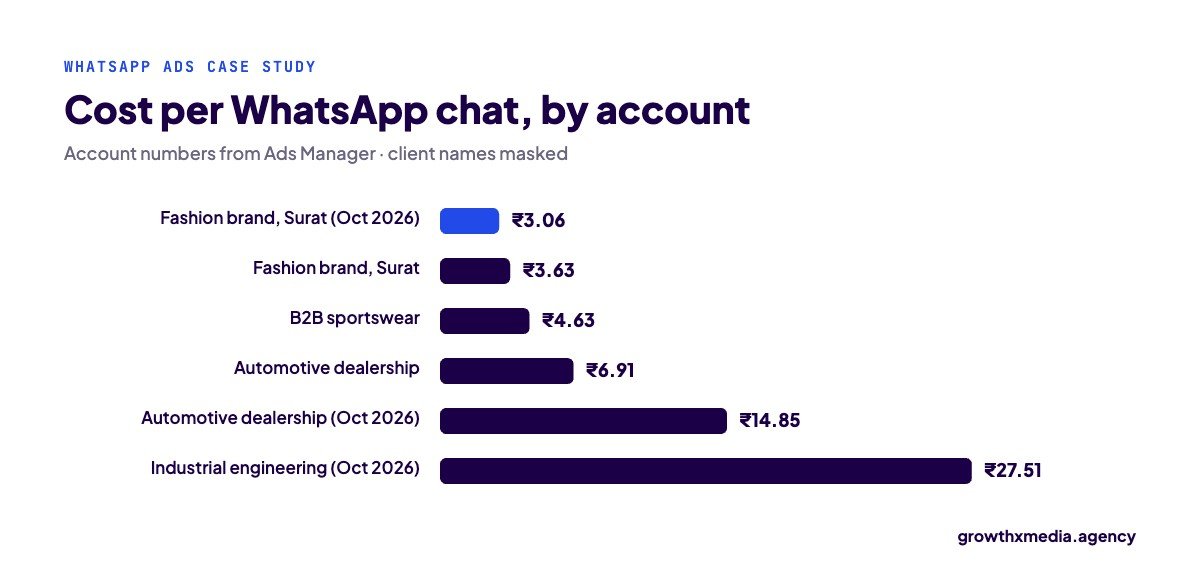
Our WhatsApp ads case study numbers, account by account
The Surat fashion brand above is our best-known example, but it is not the only one. Here is every click-to-WhatsApp account we can share, with client names masked.
| Account | WhatsApp chats | Cost per chat |
|---|---|---|
| Fashion brand, Surat (Oct 2026) | 910 | ₹3.06 |
| Fashion brand, Surat (first campaign) | 2,590 | ₹3.63 |
| B2B sportswear manufacturer | 758 | ₹4.63 |
| Automotive dealership | 1,690 | ₹6.91 |
| Automotive dealership (Oct 2026) | 700 | ₹14.85 |
| Industrial engineering (Oct 2026) | 53 | ₹27.51 |
A few things stand out. Retail and fashion run cheapest, because a short video of the product is enough to start a conversation. A dealership pays more per chat, and the cost moved between periods, which is normal as offers, seasons and creative change. An engineering company pays the most per chat, but it only uses WhatsApp as a second door next to lead forms that cost ₹9 each.
Real estate uses it too. A residential developer we work with switched from static forms to click-to-WhatsApp and held ₹18 per lead for six months. You can read that story in our real estate leads case study.
How we set up a click-to-WhatsApp campaign
The setup is the same for most businesses, with small changes for each industry:
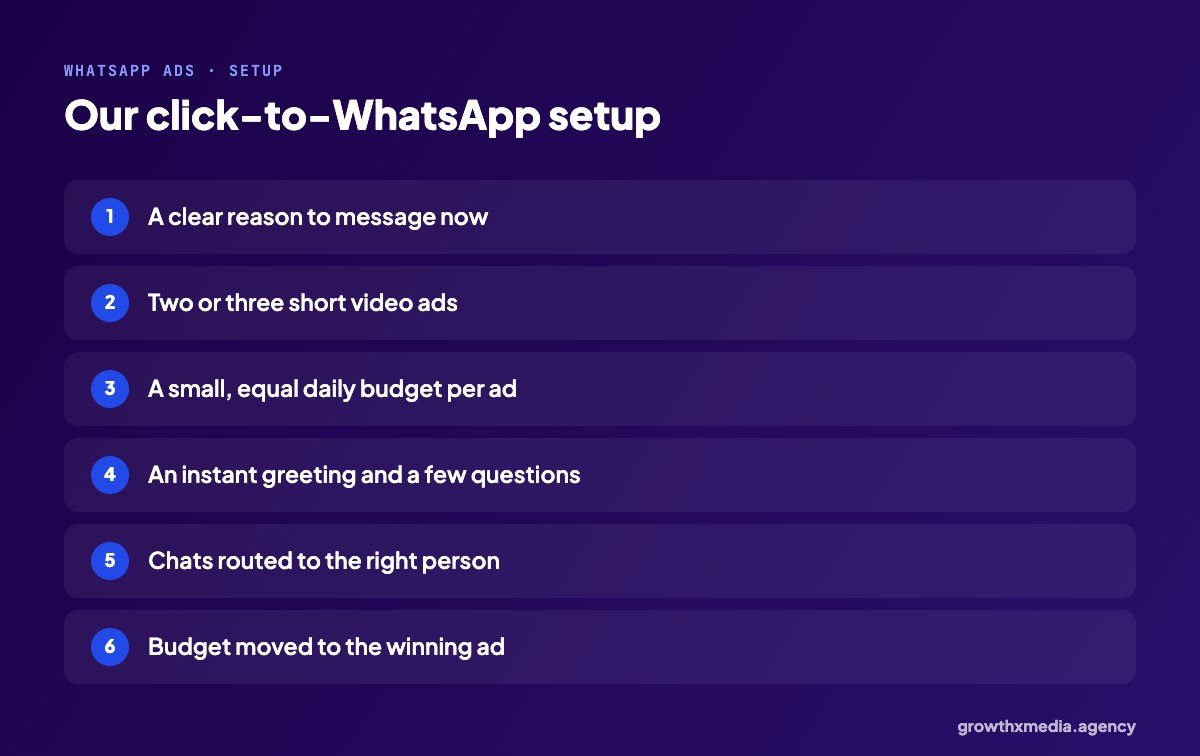
1. Give people a reason to message now
A chat needs a trigger: a price to ask about, a catalogue to see, a slot to book or an offer that ends soon. “Message us” on its own gets far fewer conversations than a specific question the buyer already has.
2. Test two or three short videos
The fashion brand started with three video ads at ₹100 a day each. That is enough budget to see which one people respond to, without betting everything on one guess.
3. Greet and qualify straight away
The first reply should arrive within moments, even at night. A short greeting and one or two questions, such as what they are looking for and where they are, sort serious buyers from browsers before anyone on your team gets involved.
4. Route the chat to the right person
Once a chat looks serious, it should reach whoever can close it: the store, the showroom, the sales desk. On the WhatsApp Business Platform this can happen automatically. On the free app, someone has to watch and hand over.
5. Move budget to the winner
After a few days, one ad usually pulls ahead. Budget moves to it. In the fashion account, one video drove 2,417 of the 2,590 conversations at ₹3.60.
Writing ads that start real conversations
Creative decides most of your cost per chat. A few things we have seen work across these accounts:
- Show the product in the first seconds. People decide to stop scrolling very quickly.
- Say what to ask. “Message us for today’s price” works better than a vague call to action.
- Use real footage. The store, the showroom, the factory floor. It looks less like an ad and more like a business.
- Keep it short. The ad only has to start the chat. The conversation does the selling.
Meta has a good overview of the format on its ad objectives page if you are setting this up for the first time.
Replying: the part that decides your cost per sale
This WhatsApp ads case study only worked because the store replied fast. A ₹3 chat that waits until the next morning is usually a lost sale. These are the rules we give every team before we launch:
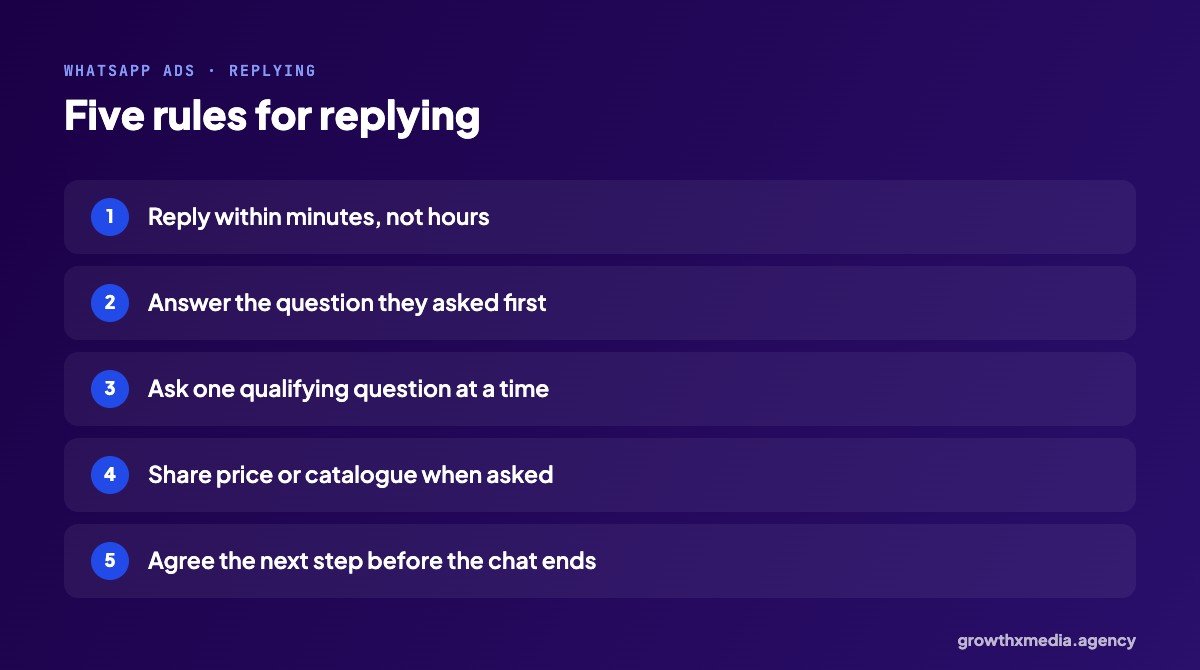
We go deeper into this in why your leads aren’t bad, you’re calling them too late.
Click-to-WhatsApp ads vs lead forms
Most businesses we talk to ask the same thing: should I run WhatsApp ads or lead forms? The honest answer is that they do different jobs.
A lead form asks the buyer to hand over their details and wait for you. It works well when you need specific information before a call, like budget, location or quantity, and when your team is set up to call leads back in order.
A WhatsApp chat asks the buyer to start talking straight away. It works well when people have a quick question before they buy, when the product sells itself in a short video, and when someone can reply within minutes. It is usually cheaper per result, as the numbers above show, but a chat is a softer signal than a filled form.
In practice, many of our accounts run both. An engineering company gets form leads at ₹9.19 and keeps a small WhatsApp campaign for buyers who would rather type. A residential developer moved from static forms to click-to-WhatsApp and held ₹18 a lead for six months.
What it costs to get started
You don’t need a big budget to test click-to-WhatsApp ads. The fashion brand in this WhatsApp ads case study started with three video ads at ₹100 a day each, and the whole first campaign cost ₹9,410. In October 2026 the same account spent ₹2,788 and got 910 chats.
A sensible first test is two or three ads at a small daily budget each for a couple of weeks. That is enough to see which creative starts conversations and what a chat costs in your market. After that, put more money behind the winner, not behind all three.
Tracking WhatsApp ads properly
Ads Manager tells you how many conversations started and what each one cost. It doesn’t tell you how many became sales. That part is up to you, and it is where most WhatsApp campaigns are judged unfairly.
- Tag every chat. New enquiry, follow-up needed, sale, not interested. A simple sheet is enough to begin with.
- Review weekly. Look at chats, sales and cost per sale together, not cost per chat alone.
- Send sales back to Meta. When you can, use the Conversions API so the platform learns which chats turned into buyers.
- Compare like with like. Judge this month’s WhatsApp numbers against last month’s WhatsApp numbers, not against form leads.
Common mistakes with WhatsApp ads
These are the mistakes we see most often when we audit accounts that already run click-to-WhatsApp ads:
- No reply plan. Ads go live, chats arrive and nobody has been told to answer them.
- One ad only. Without two or three ads to compare, you never find out which hook works.
- A vague prompt. “Hi” as the starting message gives your team nothing to work with. A prompt like “I want today’s price” does.
- Judging on cost per chat alone. The cheapest chats are not always the ones that buy.
- Switching campaigns on and off. Steady daily budgets learn faster than stop-start ones.
A simple plan for your first week
If you want to try click-to-WhatsApp ads after reading this WhatsApp ads case study, here is the plan we would follow in week one.
On day one, decide what people should message you about and who will reply. On day two, shoot two or three short videos of the product, the store or the work, each with a clear question to ask. On day three, set up the greeting and the first qualifying question. On day four, launch the ads at a small, equal daily budget each.
For the rest of the week, reply to every chat quickly, tag each one with an outcome, and do nothing to the budget yet. At the end of the week, look at cost per chat and how many chats turned into something real. Then move the budget to the ad that is doing the work, and keep the other two only if they are close behind.
When WhatsApp ads are the wrong choice
Click-to-WhatsApp is not right for every business. We usually recommend lead forms or Google Search instead when:
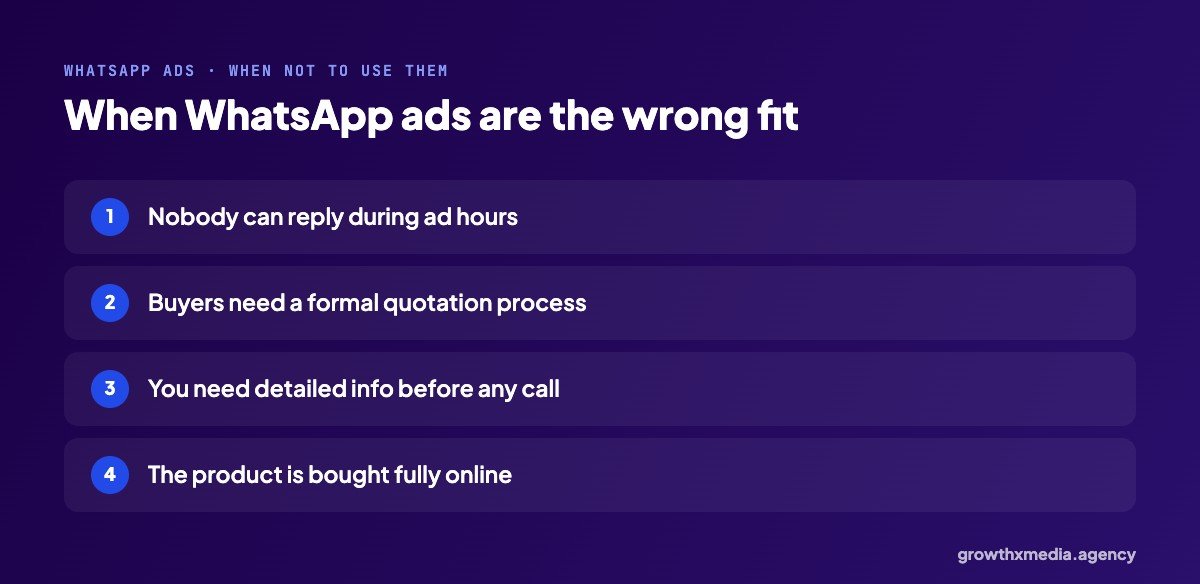
In those cases a lead form with a few qualifying questions, or a Search campaign aimed at people already looking, is usually the better start. Many accounts end up running both side by side.
WhatsApp ads case study: common questions
How much does a WhatsApp chat cost from ads?
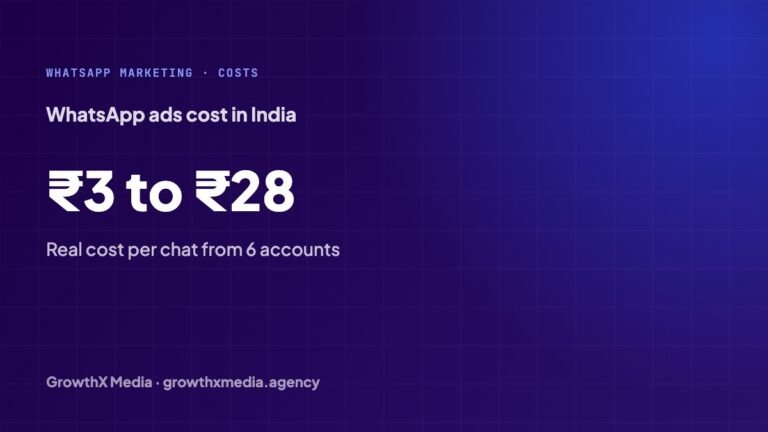
In our accounts, from ₹3.06 to ₹27.51 per chat. Fashion and retail sit at the low end. B2B and high-value products cost more per chat, and that is fine if the order value is higher.
Do I need the WhatsApp Business Platform?
Not to start. The free WhatsApp Business app works for a small team that can reply quickly. The Platform helps when you need automatic qualification, routing to different people, or reporting on every chat.
Can click-to-WhatsApp ads work for B2B?
Yes, usually as a second option next to lead forms. A B2B sportswear manufacturer we work with got chats at ₹4.63, alongside more than 2,000 form leads.
How do I know which chats became sales?
Tag each chat with an outcome, even in a simple sheet, and review it every week. Without that, you can only judge the campaign on cost per chat, which says nothing about revenue.
How fast can a campaign go live?
Inside the first week. Setup, creative and the reply flow usually take a few days. The first optimisation cycle is done before day 30.
What should the first automatic reply say?
Thank them, answer the obvious question if you can, and ask one simple question about what they need. Keep it short and friendly. The goal is to get a real reply, not to send a brochure.
Will WhatsApp ads work outside Surat?
Yes. Nothing about the format is local. We run WhatsApp campaigns for businesses across India, and the same setup works anywhere your buyers use WhatsApp, which in India is almost everywhere.
How long before I know if WhatsApp ads work for my business?
Give it two to three weeks at a steady budget. The first few days are noisy. After a couple of weeks you will know your cost per chat and, if you have been tagging chats, roughly how many turn into customers.
Can I run WhatsApp ads and Google Ads together?
Yes, and many businesses should. Google Search catches people already looking for you. Click-to-WhatsApp ads on Meta reach people before they search. Together they cover both.
Do I need a separate phone number for WhatsApp ads?
Not necessarily. Many small businesses run click-to-WhatsApp ads on the same WhatsApp Business number they already use. If several people need to answer chats, or you want automatic replies and routing, a dedicated number on the WhatsApp Business Platform makes life easier. Either way, make sure the number shown in the ad is one that someone actually watches during the hours your ads run.
See this and every other campaign on our lead generation results page, or how we run WhatsApp lead campaigns and follow-up.
Related reading: Click to WhatsApp Ads: A Simple 7-Step Setup Guide for Indian Businesses, WhatsApp Business API for Lead Generation: App vs API, Simply Explained and Lead Nurturing on WhatsApp: What to Send Leads Who Aren’t Ready Yet.
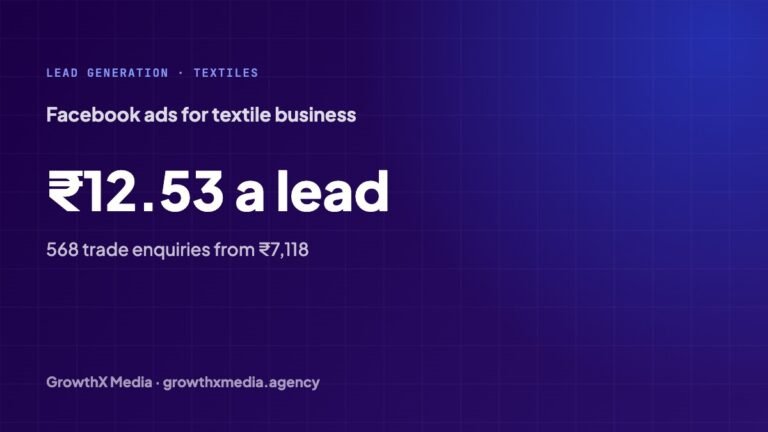
More from our accounts: WhatsApp Ads Cost in India: Real Cost Per Chat From 6 Accounts and Facebook Ads for Textile Business: Trade Leads From ₹12.53.
Want to know what your cost per lead should be? Send us your ad account for a free ad account audit. We’ll tell you the two or three changes that would move your cost per lead the fastest. No obligation either way.