“Should we run Google Ads or Facebook Ads?” We hear this in almost every first call. Most of the time the person has already been told by someone that one of them “doesn’t work” for their business.
Both work. They just do different jobs. The google ads vs facebook ads question gets a lot easier once you see it that way.
Google Ads vs Facebook Ads: the one question that decides it
Do people already search for what you sell?
If someone in Surat types “dermatologist near me” or “CNC machine manufacturer” into Google, they have a need right now. Google Search puts you in front of that person at the moment they’re looking. That’s high intent, and it’s usually where we start.
If nobody is searching yet, because your product is new, or people don’t know they need it, or they’d never think to Google it, then Search has very little to show you to. You need to create the demand. That’s what Meta (Facebook and Instagram) is good at: putting a good ad in front of the right people before they were looking.
What Google Ads is good for
- Search: people actively looking for your service. Clinics, repair services, B2B buyers searching for a supplier.
- Performance Max: lets Google spread the budget across Search, YouTube, Display and Maps once you have conversion tracking you trust.
- YouTube: useful when you need to explain something on video before people will enquire.
The catch with Search is that you can only capture the demand that already exists. If 200 people a month search for what you sell in your city, you can’t buy a 201st.
Google’s own overview of Search ads is worth a skim if you have never run them. It explains the basics of keywords and bidding better than most agency blogs.
What Meta is good for
Meta lead ads and click-to-WhatsApp ads work when you can show something. A finished interior, a before-and-after at a clinic, a product being made on the factory floor. You’re interrupting people, so the ad has to earn the attention.
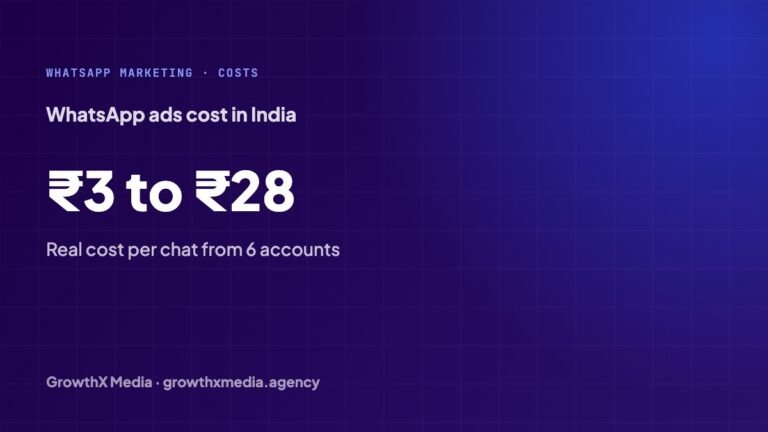
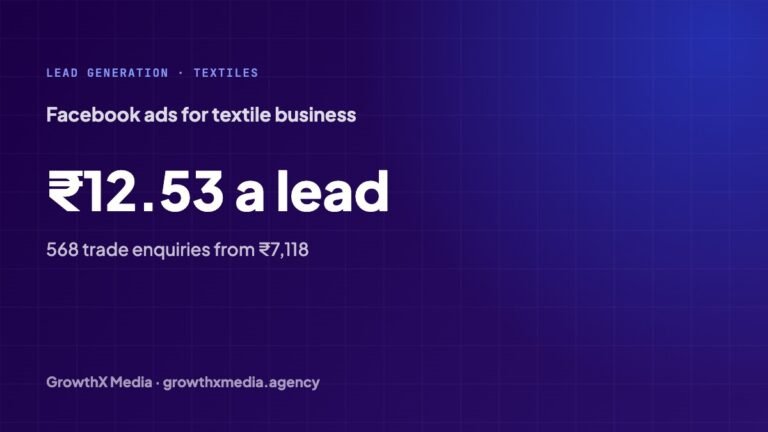
Some of our cheapest results came from Meta. A Surat fashion store got 2,590 WhatsApp chats at ₹3.63 each. A B2B textile manufacturer got lead-form enquiries at ₹12.53. Nobody was searching Google for that particular shop or that particular mill. Meta found the buyers anyway.
A rough way to choose
| Your situation | Where we’d start |
|---|---|
| People search for your service by name | Google Search |
| You need to show it before people want it | Meta lead ads or click-to-WhatsApp |
| High-ticket, needs explaining | Meta video, then add YouTube |
| Local service with clear search demand | Google Search first, Meta to add volume |
| Not sure | A free audit of what you’ve already run |
This is a starting point, not a rule. Plenty of accounts end up running both.
The part that matters more than the platform
Honestly, the choice between Google and Meta matters less than what happens after the click. Most businesses get the best cost per lead from ads plus fast WhatsApp follow-up. A cheap lead that waits two days for a call-back is not cheap. A slightly more expensive lead that gets a reply in five minutes often is.
Tracking matters too. Whichever platform you pick, set up the Pixel or Conversions API and Google tag properly, and send back which leads actually turned into sales. Otherwise the platform optimises for form fills, not customers.
What we’d do with your account
On a free audit we look at what you sell, whether there is search demand for it, and what you’ve already tried. Then we tell you which to start with and why. You can read how we run each one on our Google Ads and Meta Ads service pages.
Google Ads vs Facebook Ads: the real difference
Most comparisons of Google Ads vs Facebook Ads talk about cost per click and audience size. Those matter less than one simple difference: Google Search answers demand that already exists, and Meta creates demand that didn’t exist a minute ago.
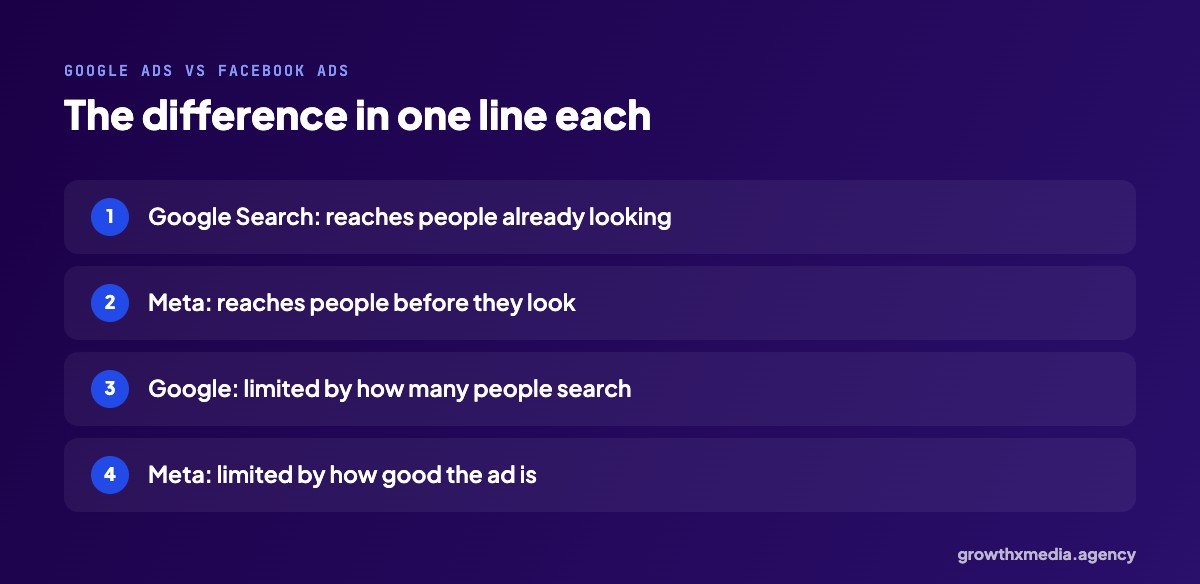
That difference decides almost everything else. On Google Search you pay to appear when someone types a need into the search box. The person is already looking, so intent is high, but there are only so many of them. On Meta you pay to put an ad in front of people while they scroll. Most of them weren’t thinking about you, so the ad has to earn their attention, but the pool of people you can reach is much larger.
How we decide where your budget goes first
On every free audit we ask four questions before recommending Google or Meta:
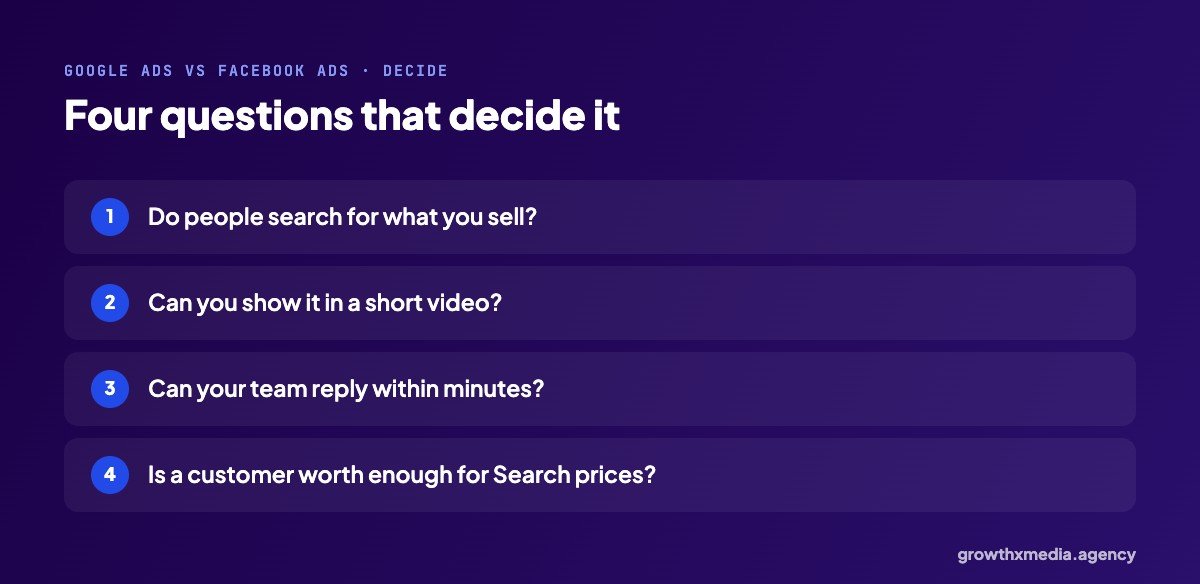
1. Do people search for what you sell?
If buyers in your city regularly search for your service, Search is usually the first place to be. If almost nobody searches for it, Search has little to show your ads to.
2. Can you show it in a short video?
Meta works best when a few seconds of video or a single photo makes someone want to ask a question: a finished room, a product on a model, a machine at work. If your product is hard to show, Meta needs more creative effort.
3. Can your team reply within minutes?
Meta lead forms and click-to-WhatsApp ads produce leads quickly, and those leads go cold quickly. If nobody can reply fast, fix that first, whichever platform you choose.
4. Is a customer worth enough for Search prices?
Search clicks can be expensive in competitive categories. That is fine when one customer is worth a lot. When margins are thin, Meta often gives more room to test.
Google Ads vs Facebook Ads by industry
These are the starting points we use most often. They are a starting point, not a rule, and many accounts end up running both.
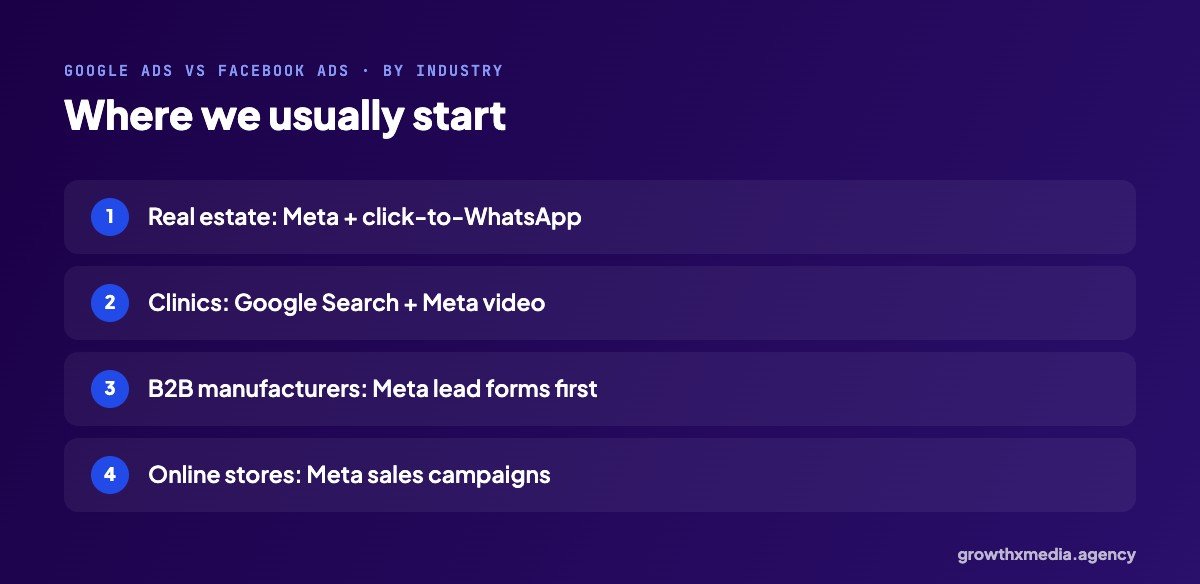
Real estate
We usually start with Meta and click-to-WhatsApp. A residential developer we work with held ₹18 per lead for six months this way, with every enquiry qualified on WhatsApp before it reached sales. Search is added once the project has a name people actually look up. More on our real estate lead generation page.
Clinics and hospitals
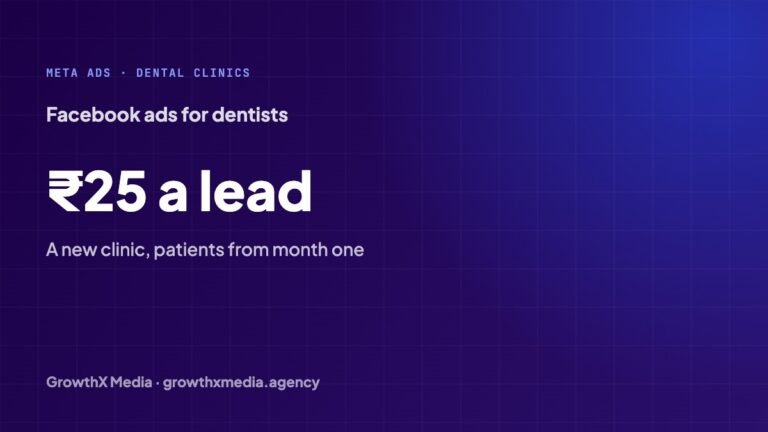
Clinics often have real search demand, so Search earns a place early. Meta adds volume through treatment-led video: a dermatology clinic we work with got leads at ₹20 with bookings up 60%. See our healthcare lead generation page.
B2B manufacturers
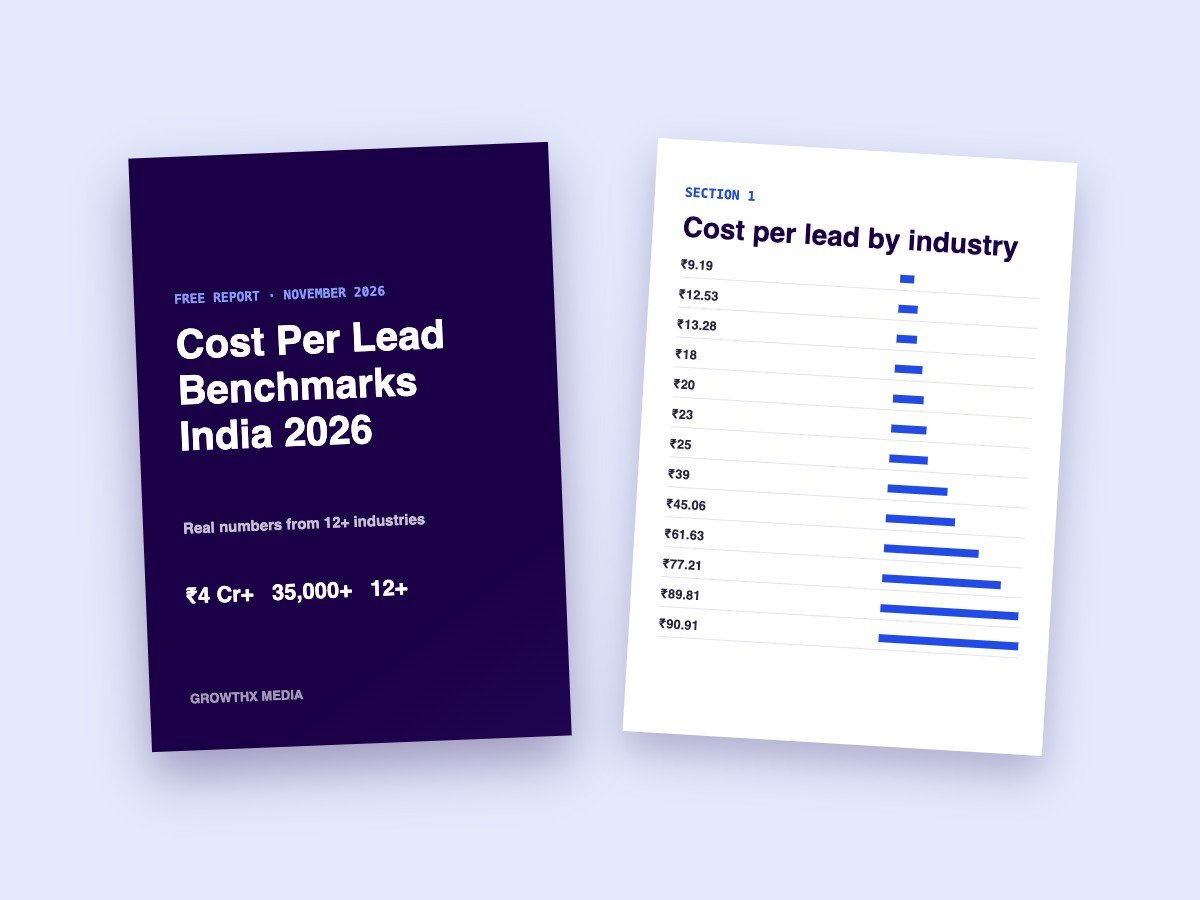
Most people expect B2B to belong on Google. In our accounts, Meta lead forms have worked very well for manufacturers: ₹9.19 for an industrial engineering company and ₹12.53 for a textile manufacturer. Search makes sense for specific product terms buyers type when they are ready to order. See B2B lead generation for manufacturers.
Online stores and retail
For e-commerce we usually start with Meta sales campaigns judged on ROAS. An online jewellery brand averaged 4.88x in October 2026. Stores and dealerships often do best with click-to-WhatsApp. See Meta Ads for e-commerce.
What Meta has delivered in our own accounts
Because this question so often comes with “Facebook doesn’t work for my business”, here is what Meta has actually delivered across the accounts we run, as account averages:
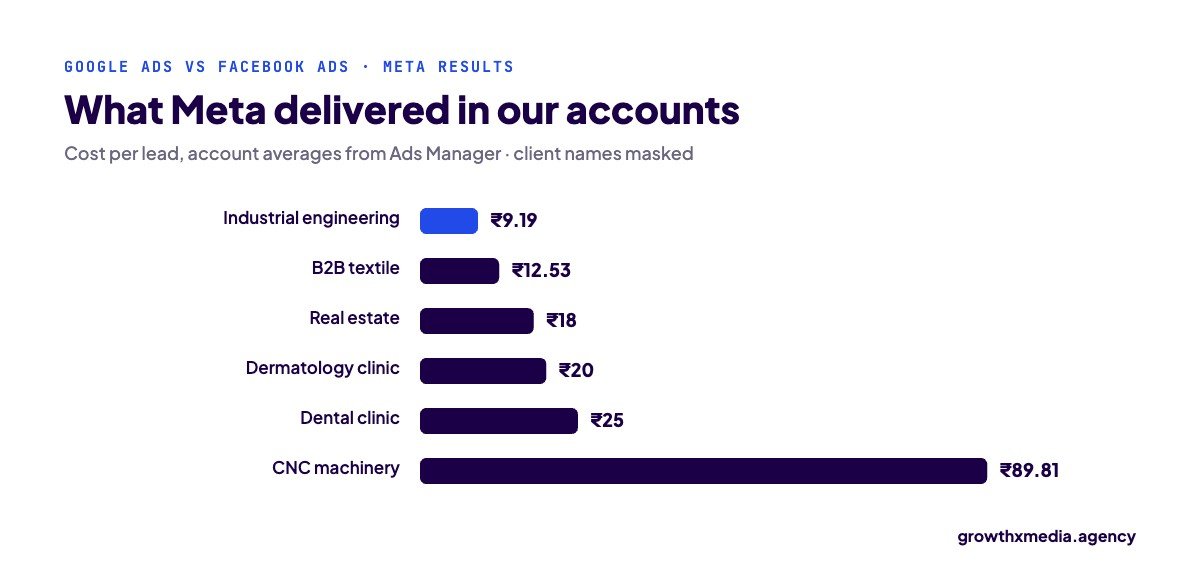
The full list, with every industry, is in our cost per lead by industry benchmarks.
Google Ads campaign types, in plain words
“Google Ads” covers several different things. For lead generation, three matter most:
- Search. Text ads that appear when someone searches a keyword you choose. This is the high-intent option and where most service businesses should start on Google.
- Performance Max. One campaign that Google spreads across Search, YouTube, Display, Gmail and Maps. It can work well, but only once conversion tracking is reliable. Without it, Google has nothing good to learn from.
- YouTube. Video ads, useful when people need to see something explained before they will enquire, and for reminding people who already visited your site.
Call assets, location assets and lead form assets can sit on top of Search ads, so a buyer can call or enquire straight from the results page.
Meta campaign types we use for leads
On Facebook and Instagram, we mainly use three kinds of campaign for lead generation:
- Lead forms. The buyer fills a short form without leaving the app. Good for B2B, real estate and clinics, especially with one or two qualifying questions.
- Click-to-WhatsApp. The ad opens a WhatsApp chat. Good for retail, dealerships and anyone whose buyers have a quick question first.
- Sales campaigns. For online stores, judged on purchases and ROAS rather than leads.
Which one fits depends on how your buyers like to get in touch and how quickly your team can respond, not just on which is cheapest.
Common mistakes when choosing between Google Ads and Facebook Ads
We see the same few mistakes again and again on audits:
- Picking based on what worked for a friend’s business. A clinic and a factory need different starting points.
- Judging Meta on one boosted post. Boosting a post is not the same as a proper lead campaign with a form, an audience and creative tests.
- Running Search on broad keywords. Without careful keywords and weekly negative keyword clean-up, Search budgets leak into irrelevant searches.
- Splitting a small budget across both from day one. Neither platform gets enough data to learn.
- Comparing the two on cost per click. Clicks don’t pay the bills. Compare cost per lead, and then cost per customer.
Splitting a budget between Google and Meta
When a business needs both, we don’t split the budget evenly on day one. We start with the platform that fits the four questions best, get it working, and then add the second one with a smaller test budget. Splitting a small budget in half from the start usually means neither platform gets enough money to learn.
Once both are running, budget follows results. If Search brings fewer but better leads and Meta brings more but weaker ones, we look at closed sales from each, not just cost per lead, before moving money.
What to measure in the first 30 days
Whichever platform you start with, the first month is about learning, not about hitting a perfect number. These are the things we watch in the first 30 days on each one:
- On Google Search: which search terms actually triggered your ads, how many turned into calls or enquiries, and which keywords to block.
- On Meta: which creative brings the cheapest real leads, how many of those leads pick up, and when the best ads start to tire.
- On both: how fast your team replied, and how many leads became a meeting, a site visit or a sale.
By the end of the month you should know your cost per lead, roughly how many leads it takes to win a customer, and whether the platform deserves more budget. That is a far better basis for the Google Ads vs Facebook Ads decision than any article, including this one.
Questions to ask any agency about Google vs Facebook
If an agency recommends one platform over the other, ask them why. A good answer refers to your business, not to a general rule:
- Do people search for what we sell, and how do you know?
- What would you test in the first month, and what would make you stop?
- Which number will you report every week?
- Will we pay the platforms directly, and can we see Ads Manager ourselves?
Tracking, whichever you choose
Both platforms get better when they know which leads turned into customers. On Google that means conversion tracking that records real enquiries and, where possible, offline conversions. On Meta it means the Pixel and the Conversions API. Without that, both platforms optimise for form fills, and you end up comparing the two on the wrong number.
Our honest answer for most Indian service businesses
If you made us pick one rule for the Google Ads vs Facebook Ads question, it would be this: start where your buyers already are, and fix your follow-up before you spend more on either. A good platform cannot rescue a lead that nobody calls back.
For businesses with clear search demand, like clinics and local services, that usually means Google Search first. For businesses that sell something people need to see, like property, interiors, fashion and many B2B products, it usually means Meta first, with lead forms or click-to-WhatsApp.
Then, once the first platform brings leads at a cost that works, add the second one as a test. Measure both on the same number, cost per customer, and let the results decide where the next rupee goes. Review that number every month, not every day, so one quiet week doesn’t push you into the wrong call. Plenty of businesses end up running both platforms. The ones that do it well rarely start with both on day one.
Google Ads vs Facebook Ads: common questions
Which is cheaper, Google Ads or Facebook Ads?
It depends on the industry and what you count. Meta often gives a lower cost per lead, while Search leads tend to come from people already looking. Compare cost per customer, not cost per click or cost per lead alone.
Can I run Google Ads and Facebook Ads at the same time?
Yes, and many businesses should, once the first platform is working. They reach people at different moments, so they tend to support each other rather than compete.
How long before I know which one works?
Give a new campaign two to four weeks at a steady budget. Campaigns go live in the first week, and the first optimisation cycle is done before day 30.
Is Facebook only for B2C businesses?
No. Some of our lowest cost per lead numbers come from B2B manufacturers on Meta. The form and the creative just have to be built for trade buyers.
Should a small business start with Google or Facebook?
Start with the one that fits the four questions above, and put all of a small budget behind it. Add the second platform once the first is bringing steady leads at a cost you’re happy with.
Do Google Ads and Facebook Ads need different creative?
Yes. Search ads are short text that answers the search. Meta ads are images or short videos that have to stop someone scrolling. Re-using the same copy on both rarely works well.
Is Instagram the same as Facebook for ads?
For ads, yes. Both run from Meta Ads Manager, and the same campaign can show on Facebook, Instagram or both. Which of the two brings more leads depends on your audience, so we usually let a campaign run on both placements and see.
Do I need a website for Facebook Ads or Google Ads?
For Meta lead forms and click-to-WhatsApp ads, not strictly. For Google Search, a fast landing page with clear contact options makes a big difference. Either way, a simple site with your work and contact details helps people trust you.
Related reading: Instagram Ads vs Facebook Ads: Which Should You Use for Leads?, Landing Page for Facebook Ads: 9 Things a Good One Has and Meta Pixel for Lead Generation: A Simple Setup Checklist (6 Steps).
Not sure where your budget should go first? Book a free ad account audit and we’ll give you a straight answer, even if it’s “neither, fix your follow-up first”.