The Facebook ads learning phase is the period right after you launch or significantly change an ad set, when Meta is still figuring out who to show your ads to. Results jump around, costs are often higher, and Ads Manager shows the word “Learning” next to the ad set.
It is normal. The problem is that many advertisers keep resetting it without realising, so their campaigns never settle. Here is how it works and how we handle it.
What happens during the Facebook ads learning phase
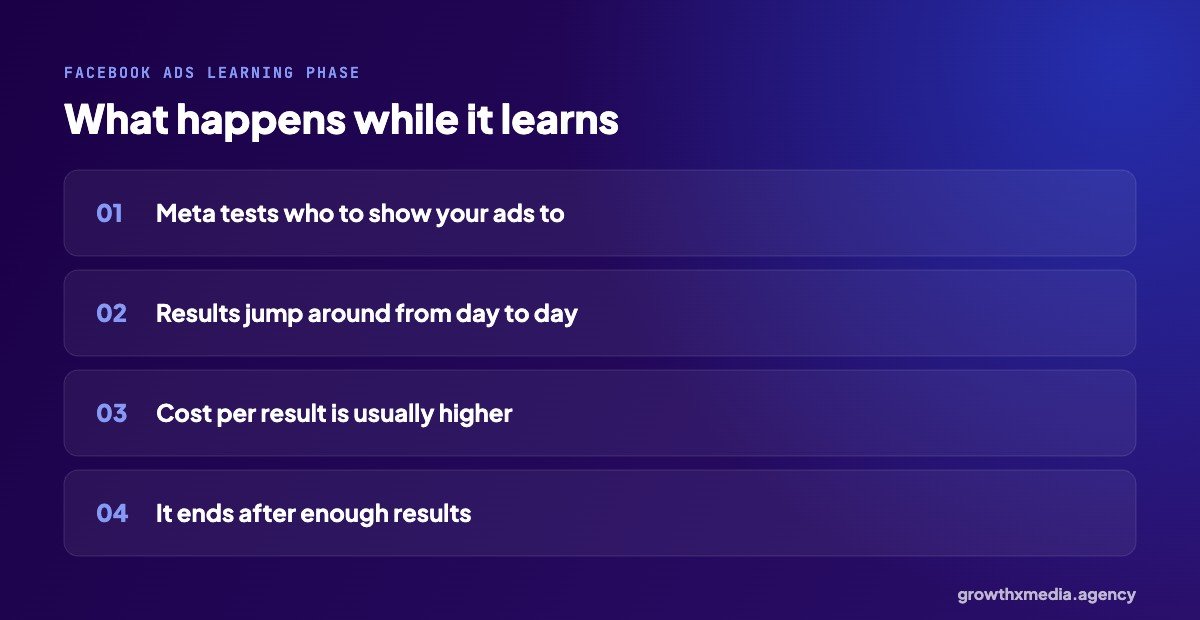
Meta’s system tests different people, placements and times to find who is most likely to take the action you asked for, like submitting a lead form. While it explores, your cost per result is usually higher and less stable than it will be later.
How long does the learning phase last?
Meta says an ad set usually needs around 50 optimisation events within a week after its last significant edit to exit learning. If your budget or results are too low to get there, the ad set shows “Learning limited”.
In practice, this is why we plan the first month the way we do: campaigns go live in the first week, and the first proper optimisation cycle is done before day 30, not after two days.
What resets the Facebook ads learning phase
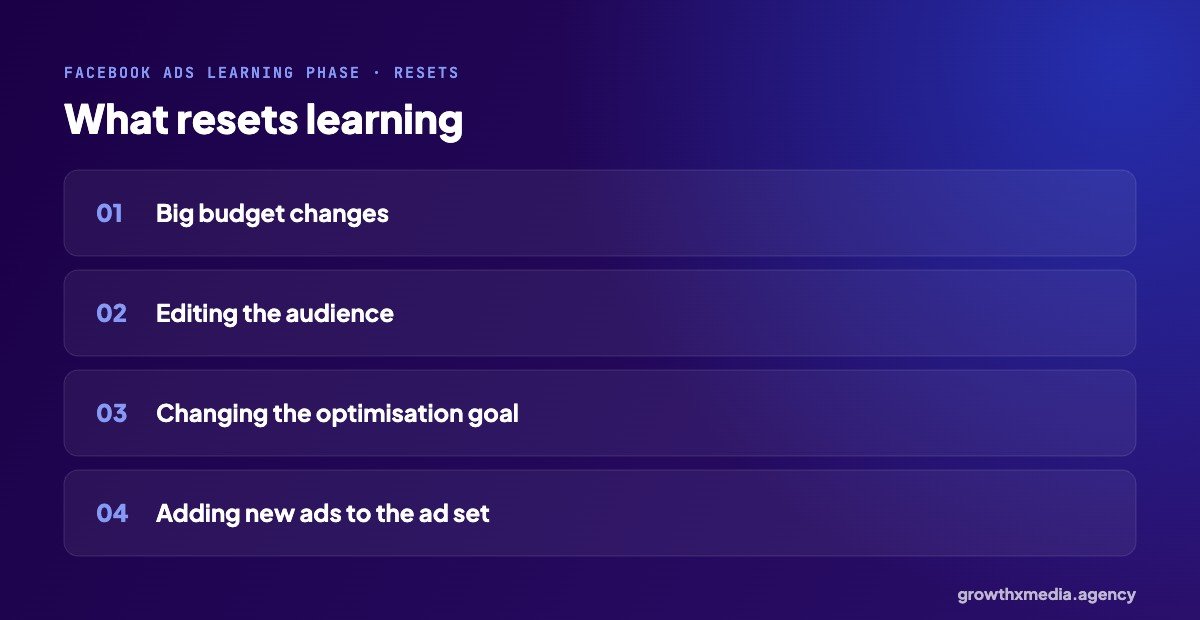
- Big budget changes. Doubling a budget overnight counts as a significant edit.
- Audience edits. Changing targeting starts learning again.
- Changing the optimisation goal. For example, from leads to link clicks.
- Adding new ads. New creative in the ad set can restart learning.
- Pausing for a long time. A long pause can put the ad set back into learning.
5 rules we follow
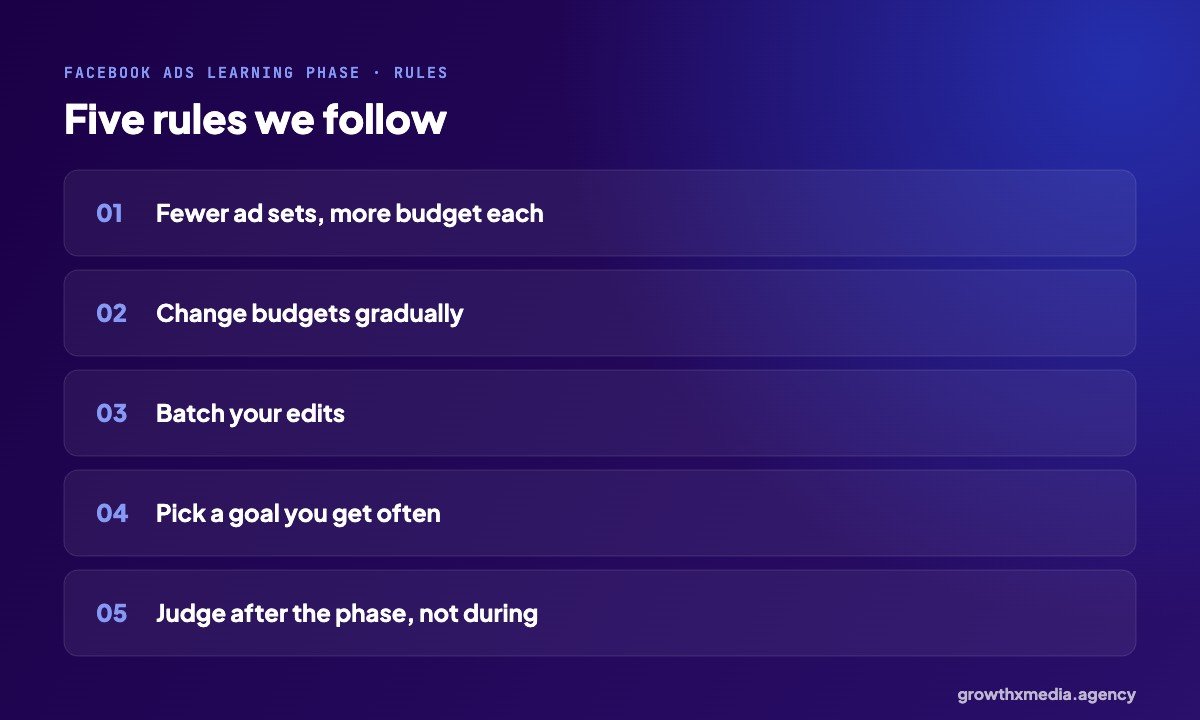
1. Fewer ad sets, more budget each
Ten ad sets with a tiny budget each will all stay in learning. A residential developer we work with had 19 ad sets; moving budget to the top 3 helped hold ₹18 per lead for six months.
2. Change budgets gradually
Raise budgets in steps rather than all at once, and give each step a few days.
3. Batch your edits
If you need to change several things, change them together, once, instead of every day.
4. Pick a goal you get often enough
If you optimise for something rare, the ad set may never exit learning. For a new account, optimising for leads is usually better than for sales calls. Later, with the Conversions API, you can move to deeper goals.
5. Judge after learning, not during
Early numbers are noisy. Don’t switch off an ad set on day two because one lead cost more than expected.
Learning phase and creative testing
Testing new ads does not have to wreck learning. We usually test two or three ads at a time with equal budgets, and bring new challengers in batches. See Facebook ad creative testing for our full approach.
Our first 30 days
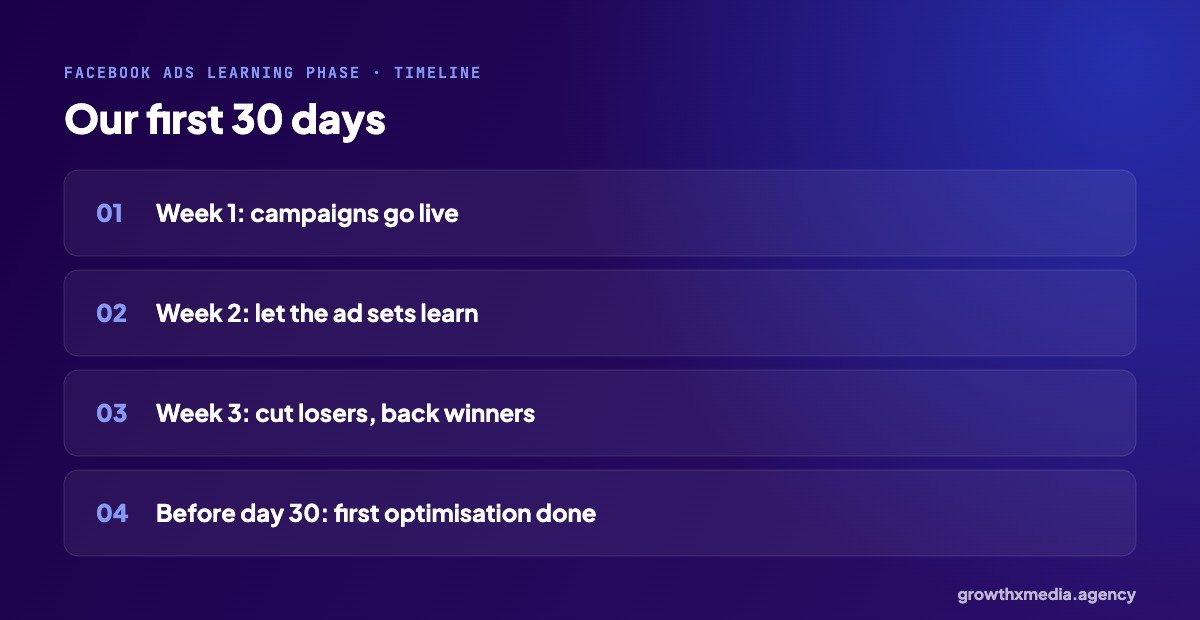
Week one, campaigns go live. Week two, ad sets learn and we leave them alone. Week three, we cut clear losers and back winners. Before day 30, the first optimisation cycle is done and the account has a stable cost per lead to build on.
Facebook ads learning phase: quick answers
Is it bad to be in the learning phase?
No. Every ad set starts there. It only becomes a problem when you keep resetting it.
What does “Learning limited” mean?
The ad set is not getting enough results to finish learning. Usually the fix is more budget per ad set, a broader audience or an easier goal.
Meta explains the details on its learning phase help page. Want a second opinion on your account? Get a free ad account audit.
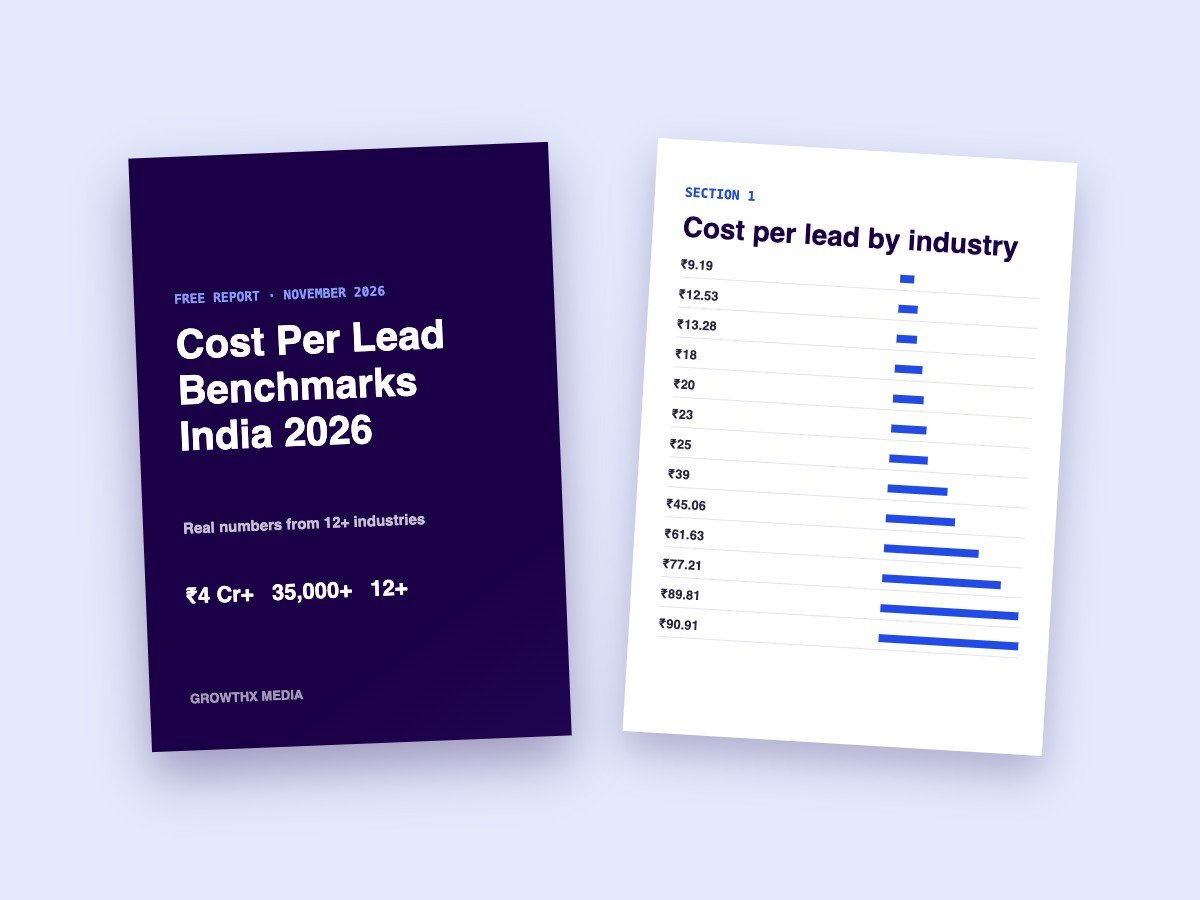
Want every benchmark in one place? Download our free cost per lead report with numbers from 13 industries.