Getting cheap real estate leads for one good week is easy. Keeping them cheap for six months, while every other developer in the area is bidding on the same buyers, is the hard part. That is what this campaign for a residential developer was about.
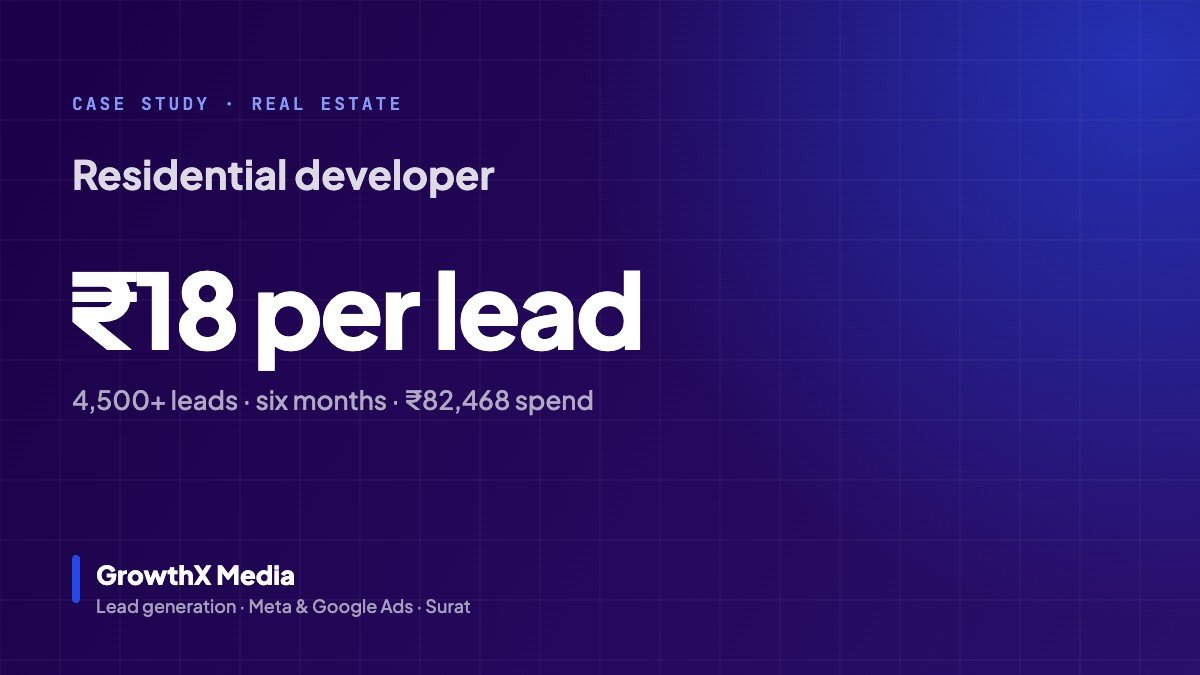
The numbers first, because that’s what you came for.
| What | Result |
|---|---|
| Average cost per lead | ₹18 |
| Leads | 4,500+ |
| Ad spend | ₹82,468 |
| How long | Six months |
These are account averages taken from Ads Manager, not a screenshot of the best day.
The problem: a budget that couldn’t carry ₹100 leads
The developer had residential inventory competing with every developer in the catchment. Same buyers, same Facebook and Instagram feeds, same festive offers. The budget simply could not absorb a cost per lead of ₹100 or more, which is where a lot of real estate accounts end up once the easy audience is used up.
So the brief was not “get more leads”. It was “get leads the sales team can turn into site visits, at a price the project can afford, month after month”.
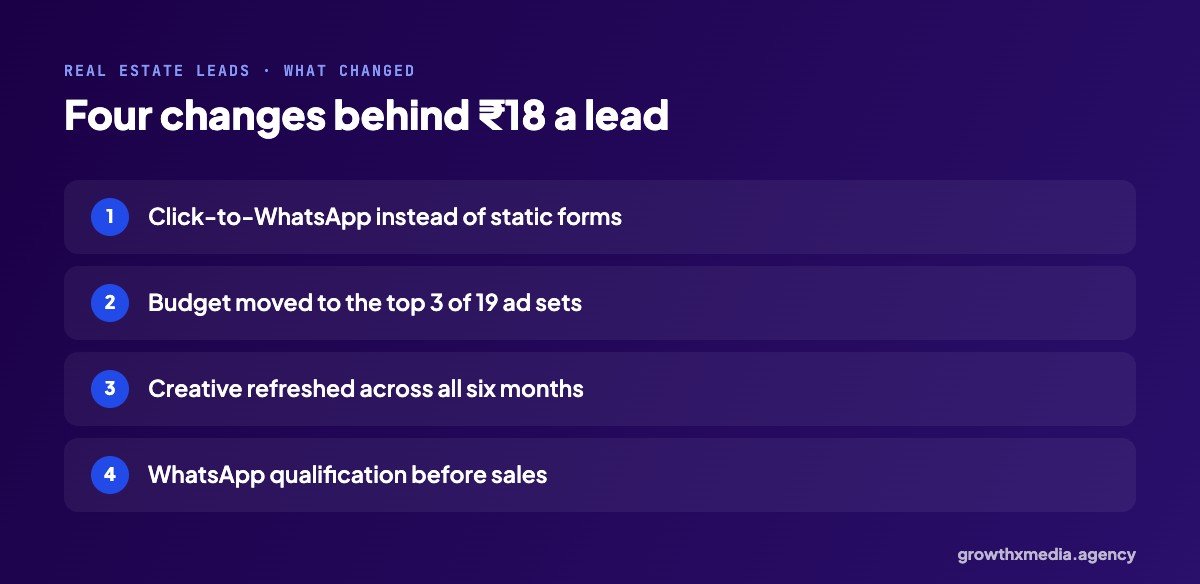
We cut 19 ad sets down to 3
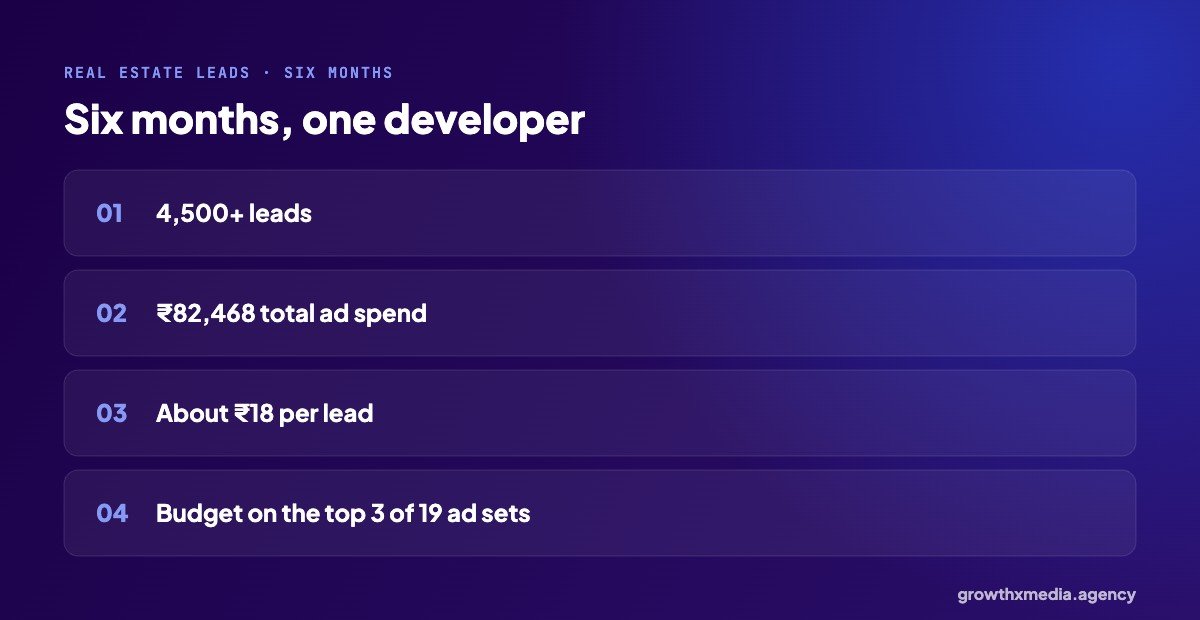
When we looked at the account there were 19 ad sets running. That sounds thorough. In practice it means the budget is sliced so thin that no ad set gets enough data to learn, and you can’t tell what is actually working.
We moved the daily budget into the top 3 and switched the rest off. It feels risky to turn off 16 ad sets. It isn’t. Most of them were spending money to tell us something we already knew.
Real estate leads on WhatsApp, not static forms
The bigger change was dropping the static lead form and running click-to-WhatsApp campaigns instead.
Meta’s own lead ads are a good format for plenty of businesses. For property, we found that a conversation the buyer starts works better than a form they fill in and forget.
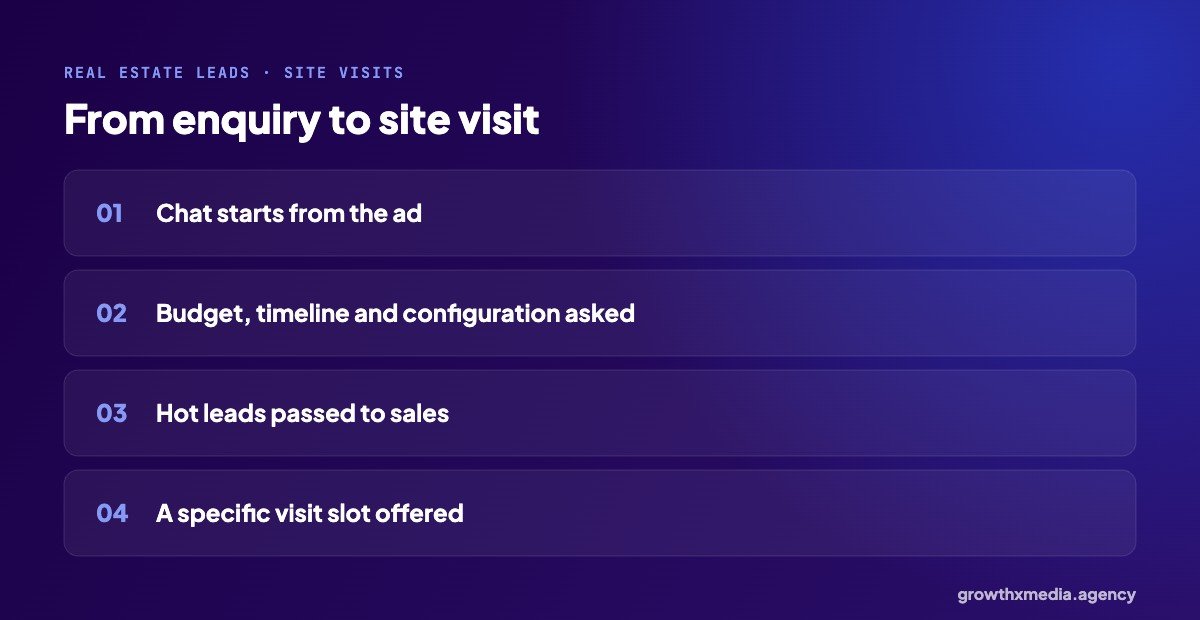
A form lead in real estate often looks like this: name, number, done. Then your sales team calls, the person doesn’t remember filling anything, and the lead gets marked “not interested”. On WhatsApp the buyer starts the conversation themselves. They ask about the price, the possession date, the floor plan. That is a person who is actually thinking about buying.
Every enquiry also got instant WhatsApp qualification before it reached the sales team. A few quick questions, answered in the chat. So by the time a salesperson picked it up, they knew who they were talking to.
Keeping it cheap meant changing the ads, not the audience
Holding ₹18 for six months had less to do with targeting than people expect. What kept changing was the creative.
Ads wear out. The same video that brings in cheap enquiries in month one gets scrolled past by month two, and cost per lead starts creeping up. We kept a continuous creative refresh running across all six months so there was always something new in rotation before the old ads got tired. We wrote about this pattern in more detail in why cost per lead keeps rising.
What the sales team got out of it
The result we care about most is not on the table above. It’s that the sales team had a predictable site-visit pipeline they could plan staff around, month after month. When leads arrive in a steady flow and they’re already qualified, the sales side stops guessing.
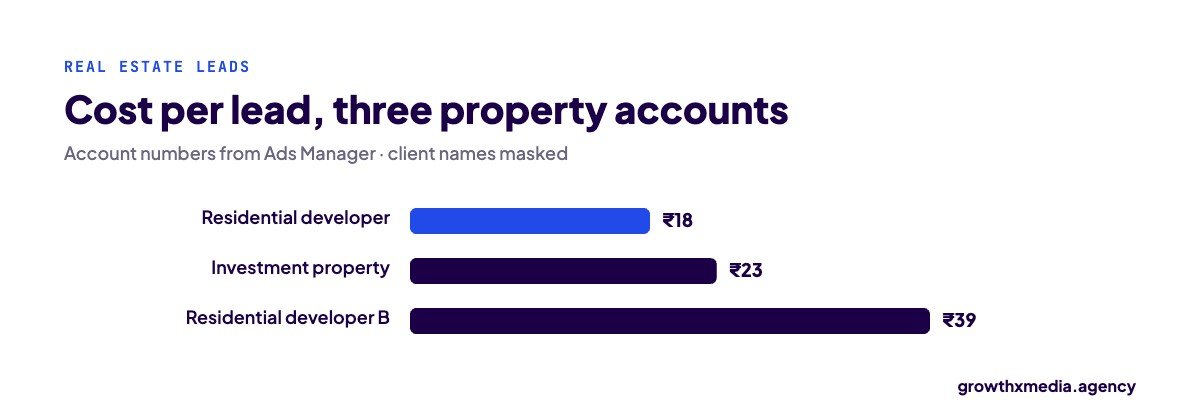
For context, here is how this compares with other real estate accounts we have run:
| Real estate account | Average cost per lead |
|---|---|
| Residential developer | ₹18 |
| Investment property | ₹23 |
| Developer B | ₹39 |
All three are in our cost per lead benchmarks by industry. A ₹39 lead is not a bad result if it books site visits. We once paid ₹134 for a lead that closed a ₹25 L project, and we would happily do it again.
If you sell property, start here
- Count your ad sets. If it’s more than you can name from memory, consolidate.
- Try click-to-WhatsApp next to your lead form for a few weeks and compare how many of each actually pick up.
- Put two or three qualifying questions in front of every enquiry before it reaches sales.
- Plan new creative before the current ads get tired, not after.
You can see the full case study along with five others on our lead generation results page.
Real estate leads: quick answers
How much did each real estate lead cost?
About ₹18 per lead, held for six months, with more than 4,500 leads from ₹82,468 of ad spend.
What made the biggest difference?
Switching from static forms to click-to-WhatsApp, and qualifying every enquiry on WhatsApp before it reached sales.
How was cost per lead kept steady for six months?
Fresh creative throughout the campaign, and budget kept on the top 3 of 19 ad sets.
Related reading: Facebook Ads for Real Estate in India: A Proven Playbook (₹18 Leads), Facebook Ad Fatigue: 5 Warning Signs and How We Fix It and Click to WhatsApp Ads: A Simple 7-Step Setup Guide for Indian Businesses.
If your real estate leads are getting expensive or not picking up, send us your ad account for a free ad account audit. We’ll tell you the two or three things we’d change first.